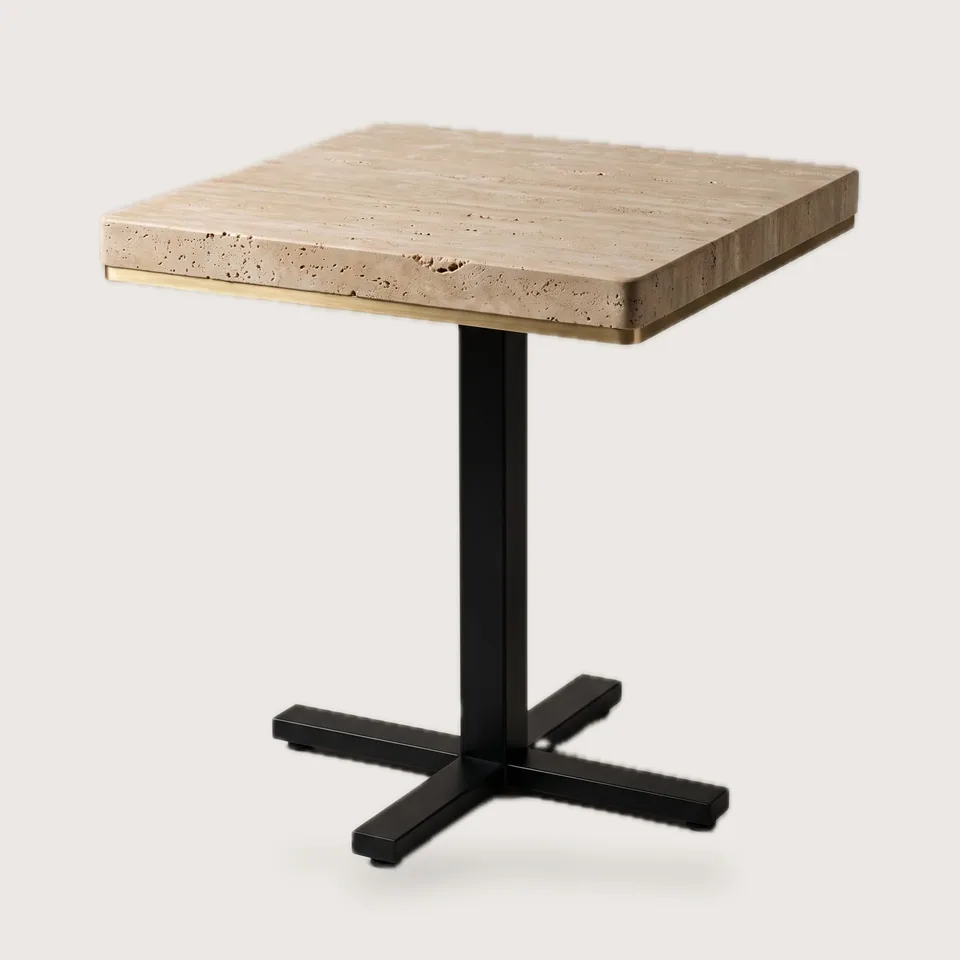
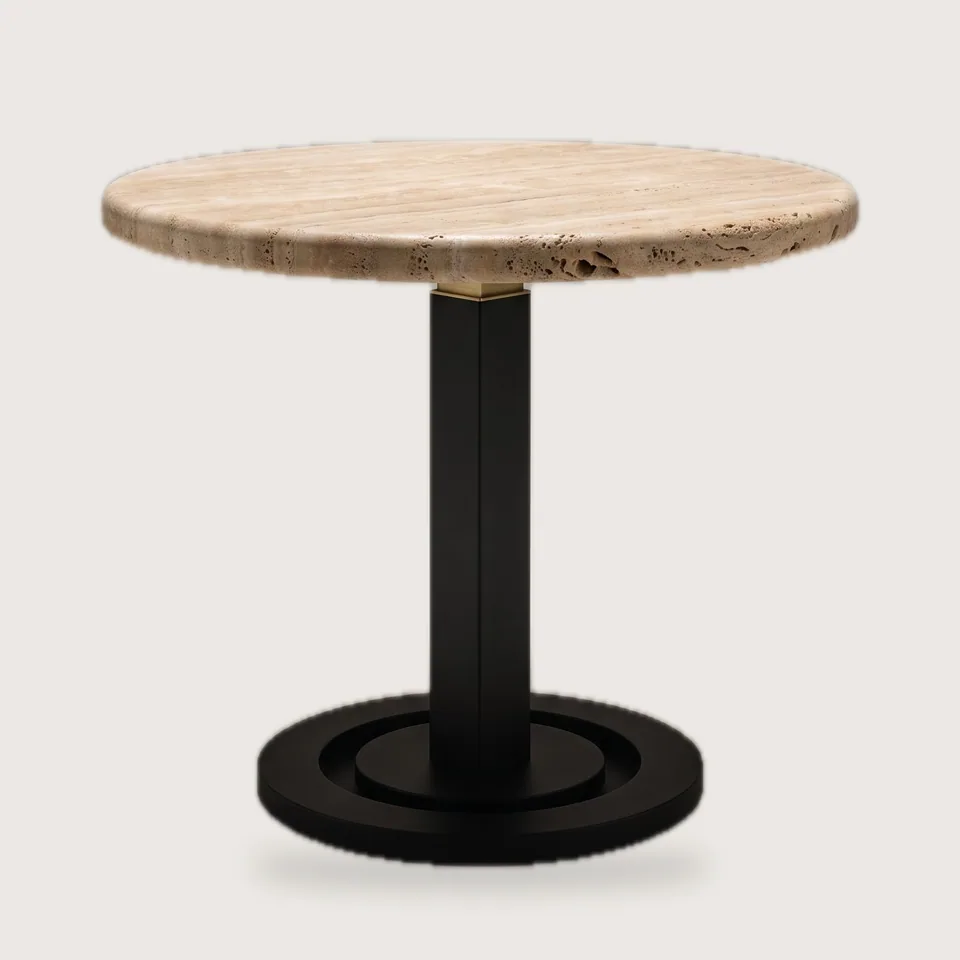
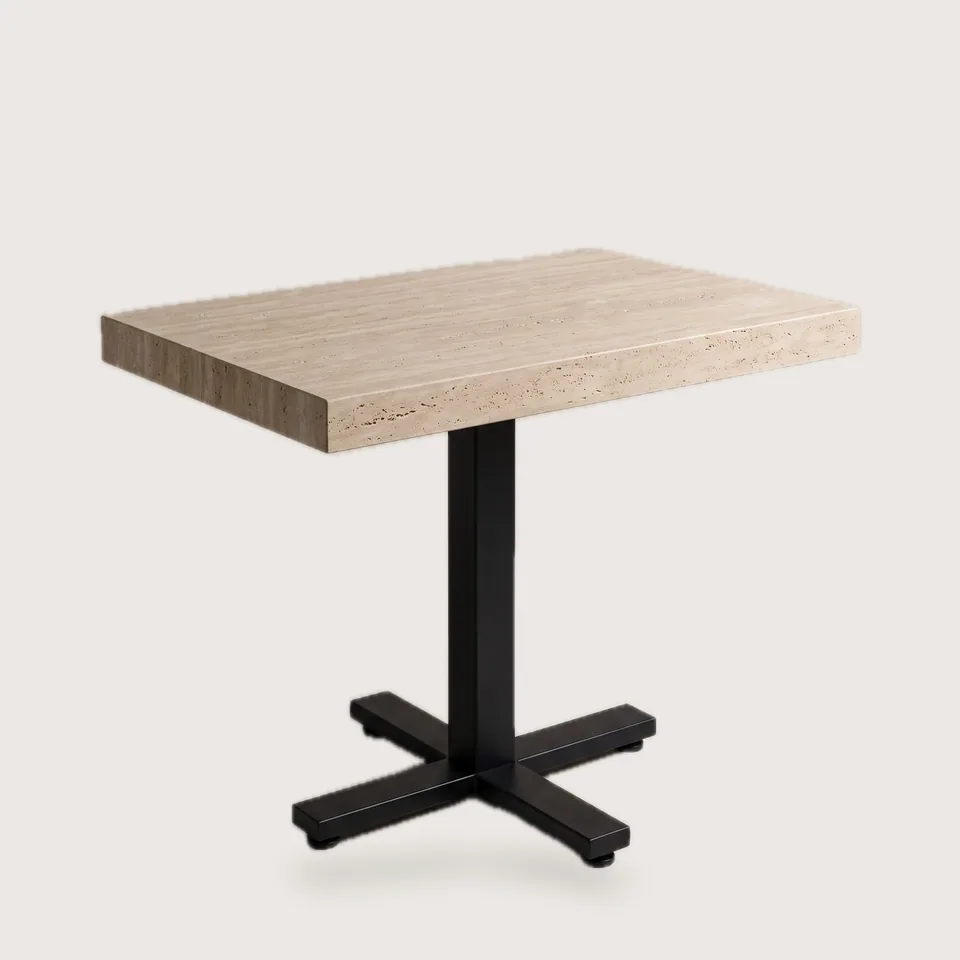
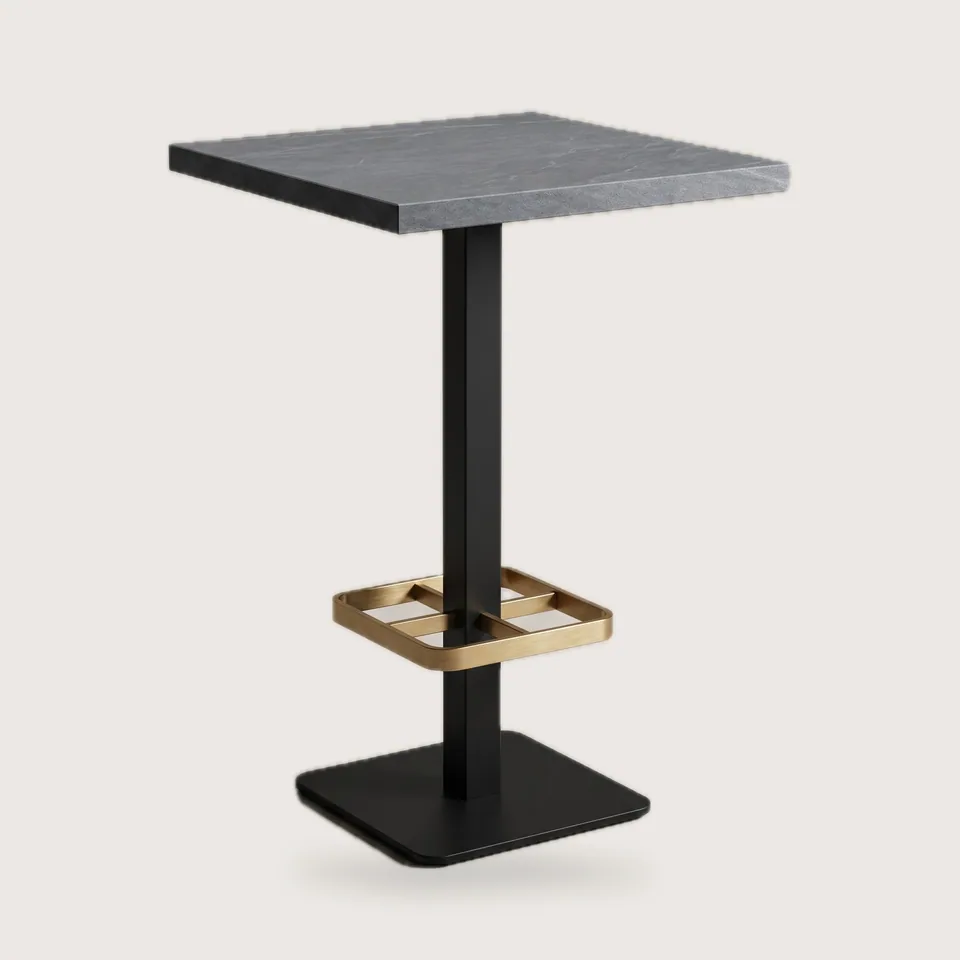
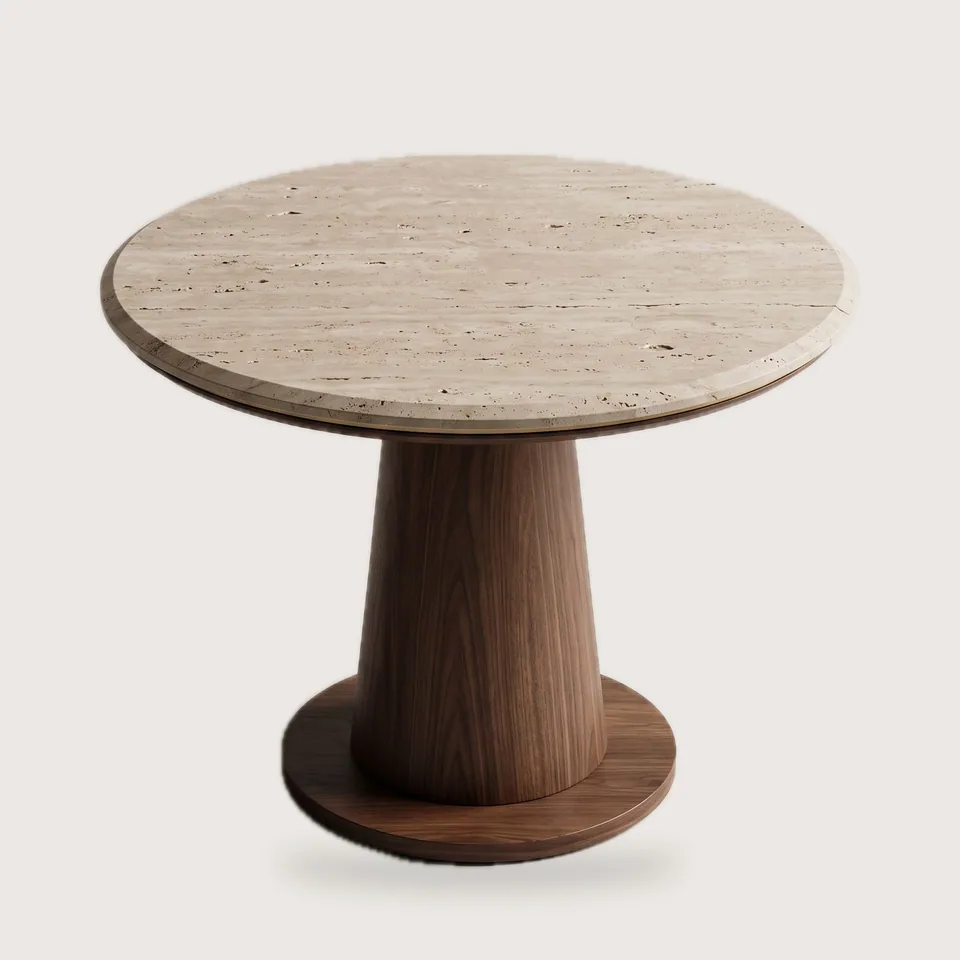
Most restaurants need at least three table sizes, and most end up with three different bases that never quite match. Calder solves that with a single column section: a matte black flat steel column 4¾ × 2⅜ in (12 × 6 cm) in section, landing on either a four-arm cross foot or a weighted steel disc. Tops are travertine-look or soapstone-look sintered stone with a 2 in (5 cm) mitred edge, so the slab looks solid while staying far lighter than real stone of the same apparent thickness.
A ⅛ in (3 mm) brass reveal line between column cap and top is the signature detail; it repeats on every size, from the two-top by the window to the bar-height table by the bar.
| Configuration | Top | Height | Base | Typical use |
|---|---|---|---|---|
| Square two-top | 30 × 30 in (76 × 76 cm) | 30 in (76 cm) | Cross foot | Two covers, pushes together for four |
| Rectangular four-top | 30 × 42 in (76 × 107 cm) | 30 in (76 cm) | Cross foot | Four covers, booth-facing |
| Round | Ø 35½ in (90 cm) | 30 in (76 cm) | Steel disc | Four covers, curved banquettes |
| Bar-height | 27½ × 27½ in (70 × 70 cm) | 42 in (107 cm) | Plate + brass foot ring | Two to four standing or stool covers |
| Counter version | any of the above | 36 in (91 cm) | Cross or plate | Counter stools 24–26 in |
All Calder bases take adjustable glides as standard. Counter and bar heights use a heavier foot because a taller column multiplies leverage on the top. Sizes are standard starting points; we redraw tops to your plan in 1 in steps.