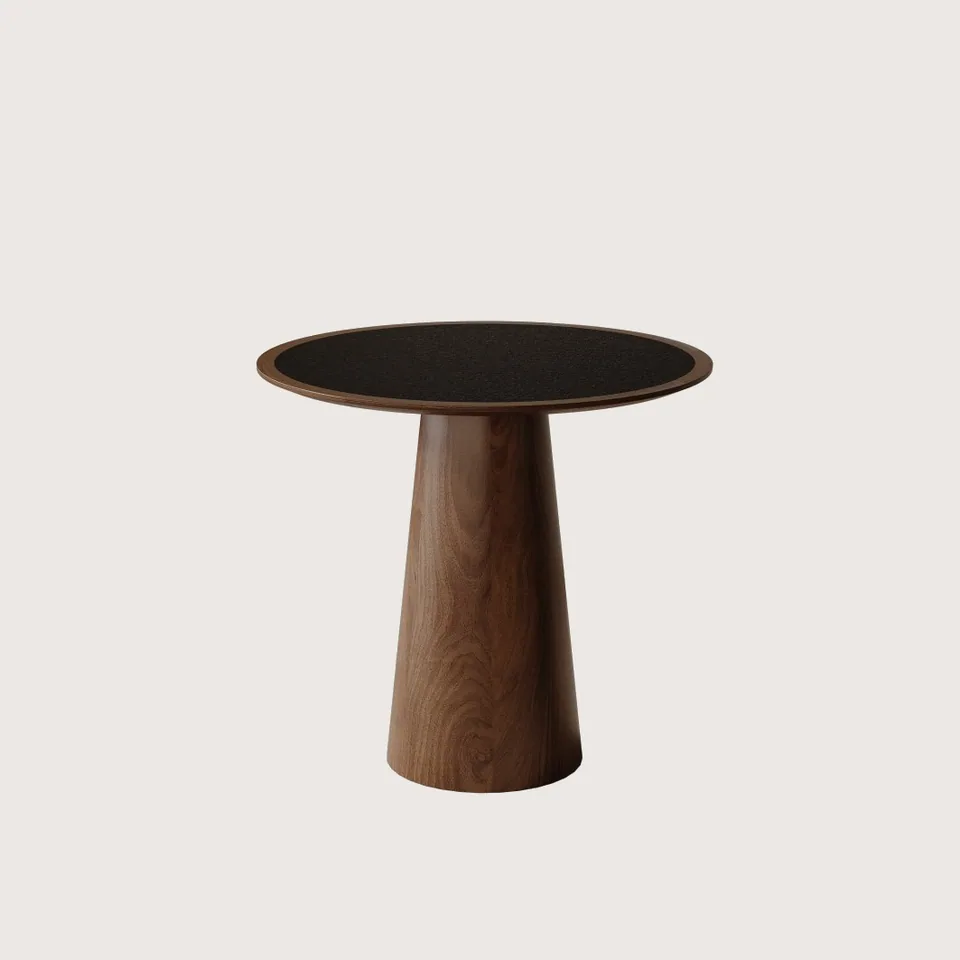
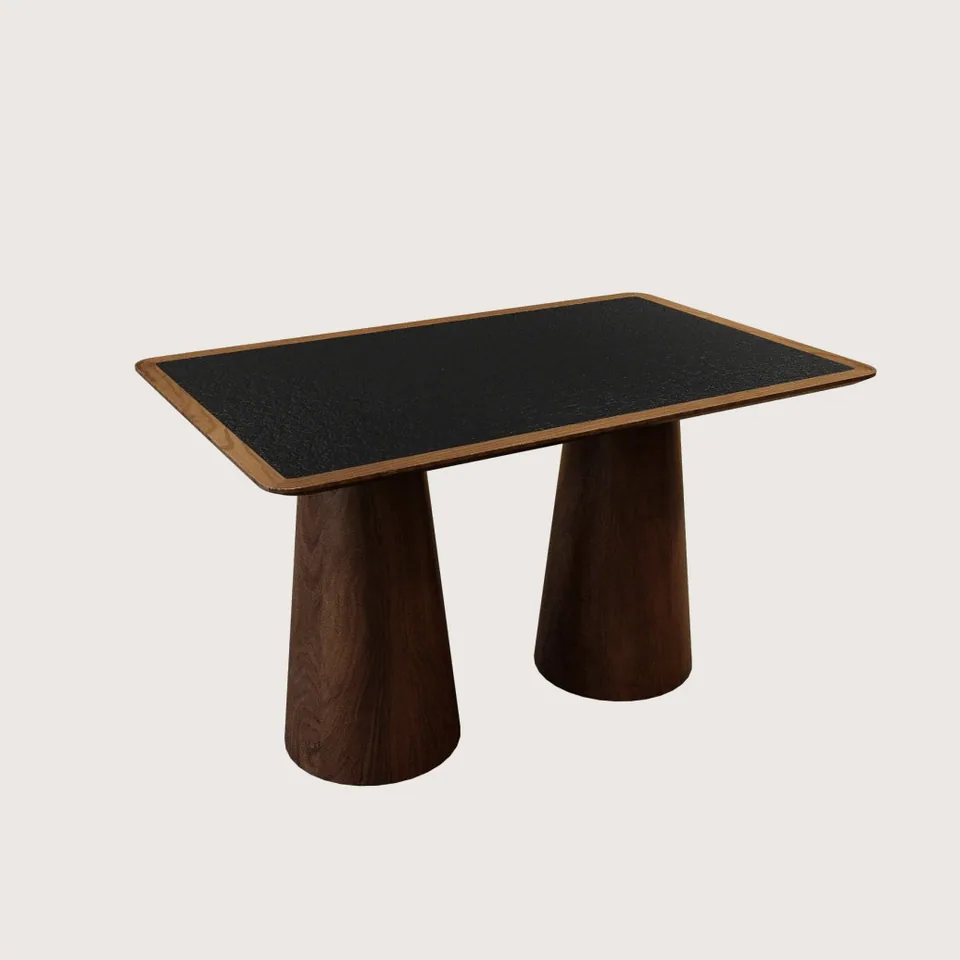
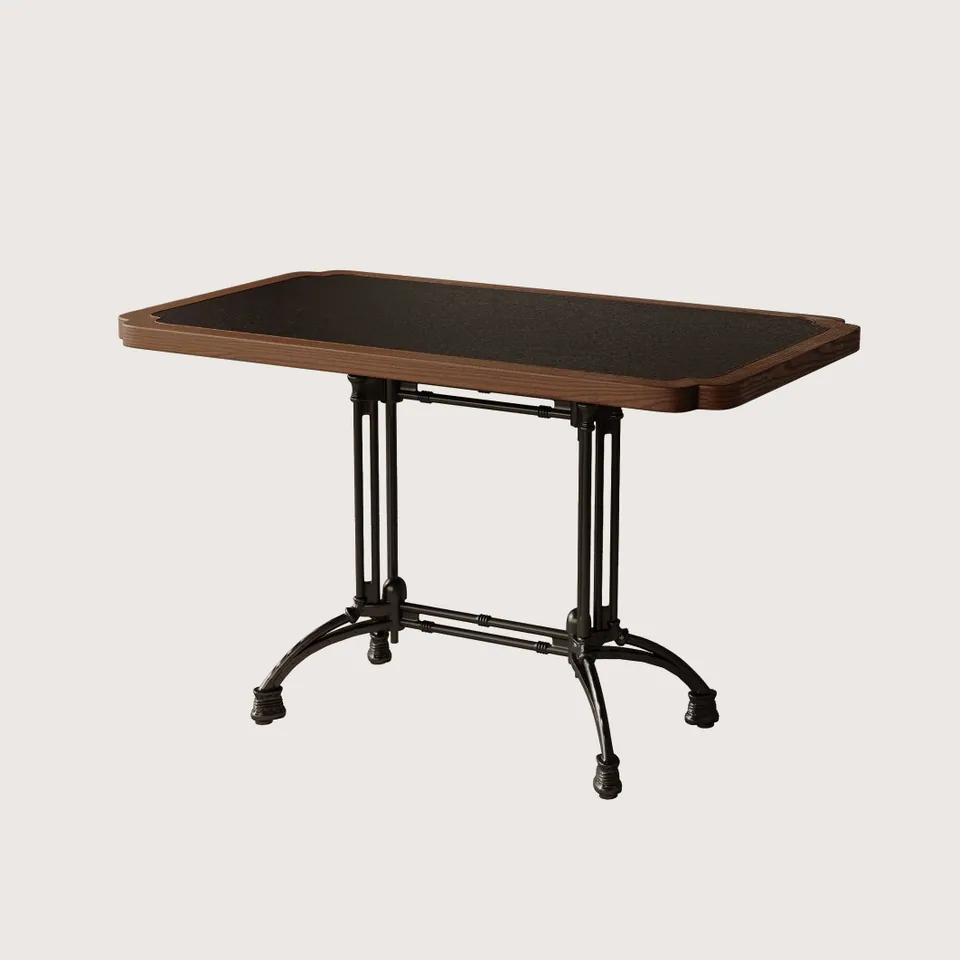
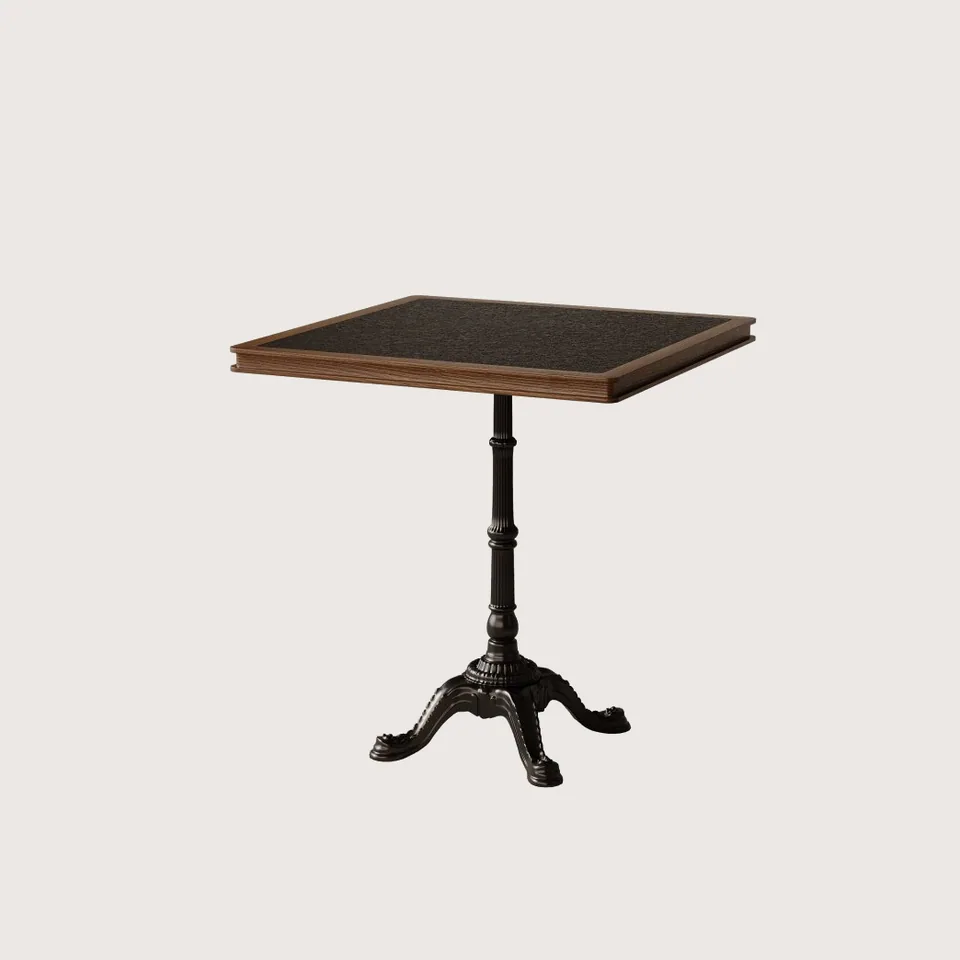
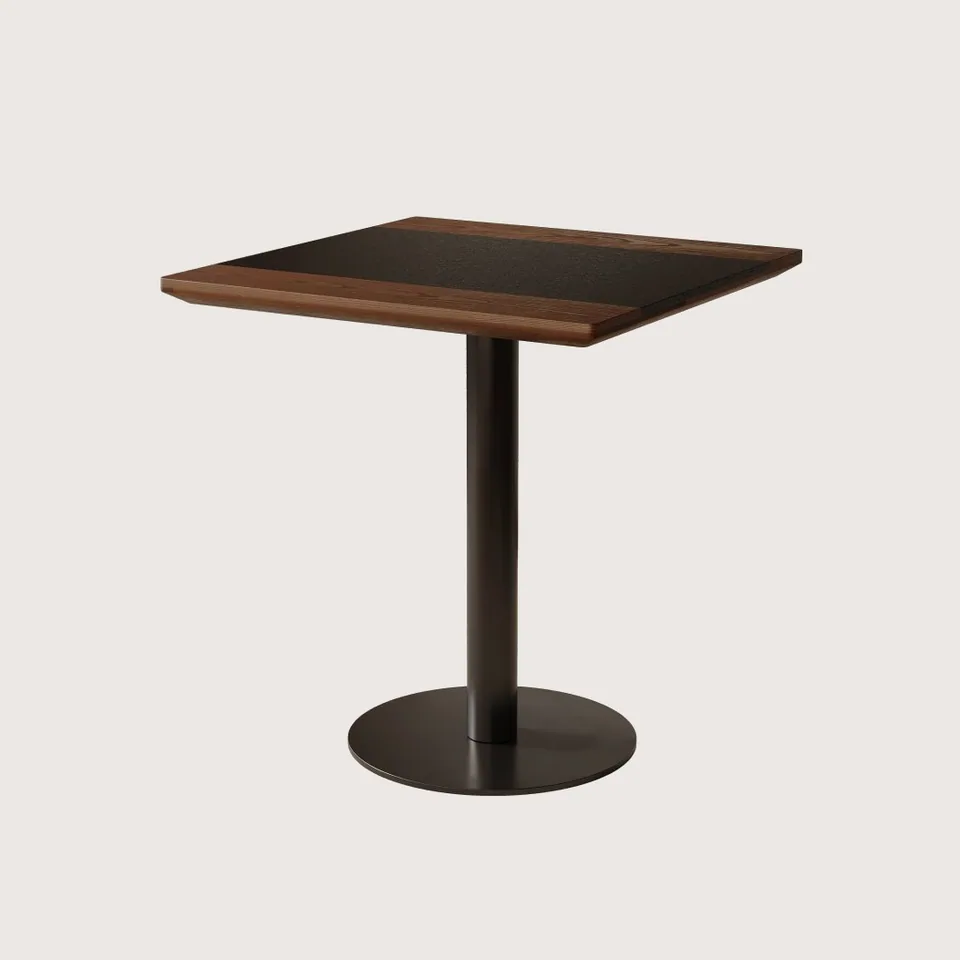
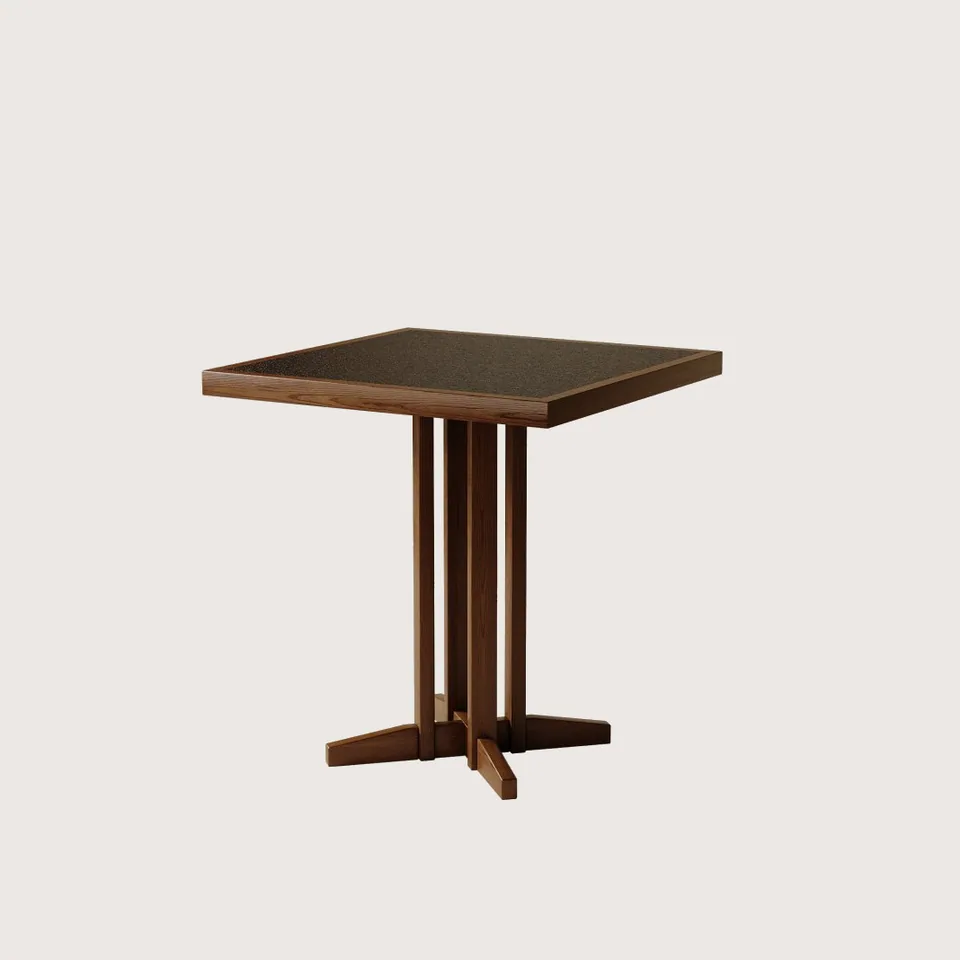
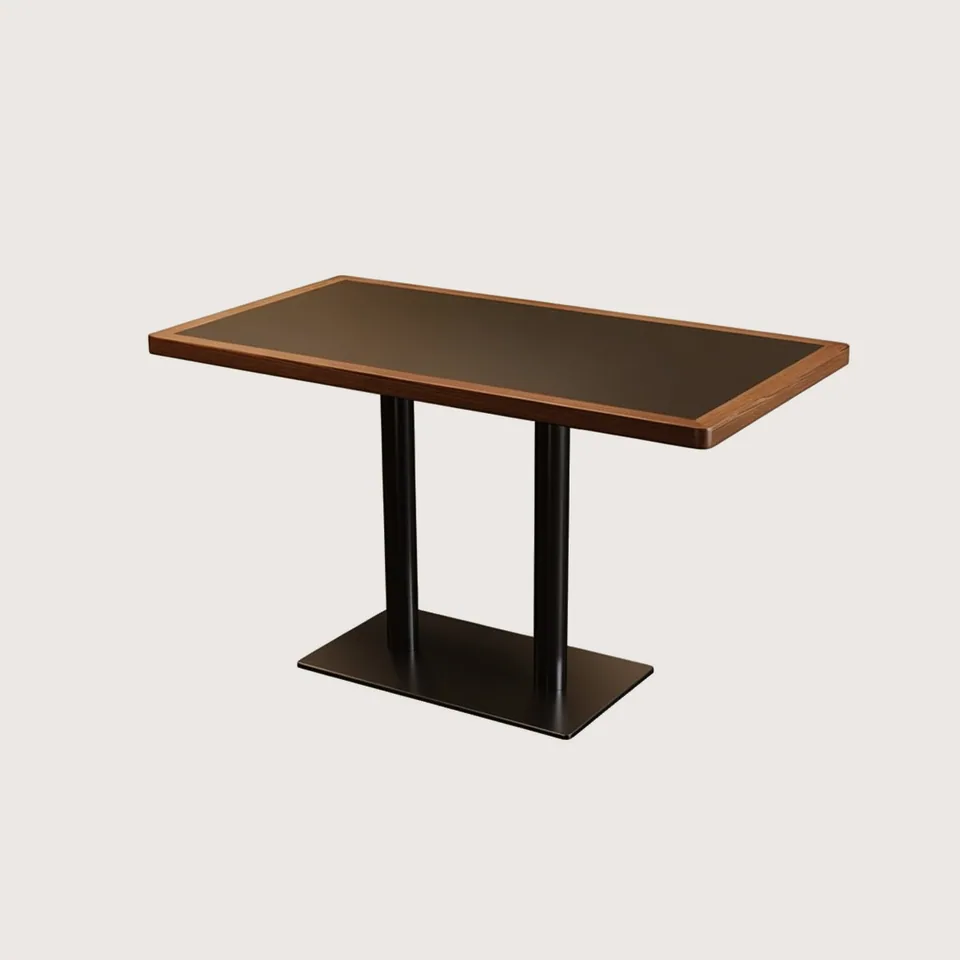
Dark tops hide what light tops show: coffee rings, red sauce and the grey haze of a long Saturday. The surfaces in this family are a fine-textured charcoal, supplied in sintered stone or high-pressure laminate depending on budget and use; both are inset into a solid-wood band with a softened edge, so the knocks land on timber you can touch up, not on the surface.
The bases carry the character. Timber cones give a sculptural, almost furniture-like silhouette; cast-iron bistro feet read classic Paris; slim steel columns on plates disappear under the top; four-post timber bases suit long rectangles and keep knees clear.
| Base | Look | Best top sizes | Watch-out |
|---|---|---|---|
| Timber cone | Sculptural, warm | 24–36 in square/round; twin cones for 30 × 48 in+ | Cone footprint limits knee room at corners |
| Cast-iron bistro | Classic, heavy | 24–30 in two-tops; twin for rectangles | Heavy to move; ideal where tables stay put |
| Steel column + plate | Quiet, minimal | 24–30 in square; twin for 30 × 48 in | Plate must be at least ~60% of top width |
| Timber four-post | Joinery, open | 24 × 30 to 30 × 60 in | Posts sit inboard so chairs still tuck |
Surface choice changes weight and heat resistance, so we state the specified material on every drawing. Sizes, heights and finishes are made to order.
The dark-top family mixes freely with our stone-top and solid wood tables because the timber bands, heights and fixing systems are shared. Many rooms use dark tops in the bar and wine zones and light stone tops by the windows.