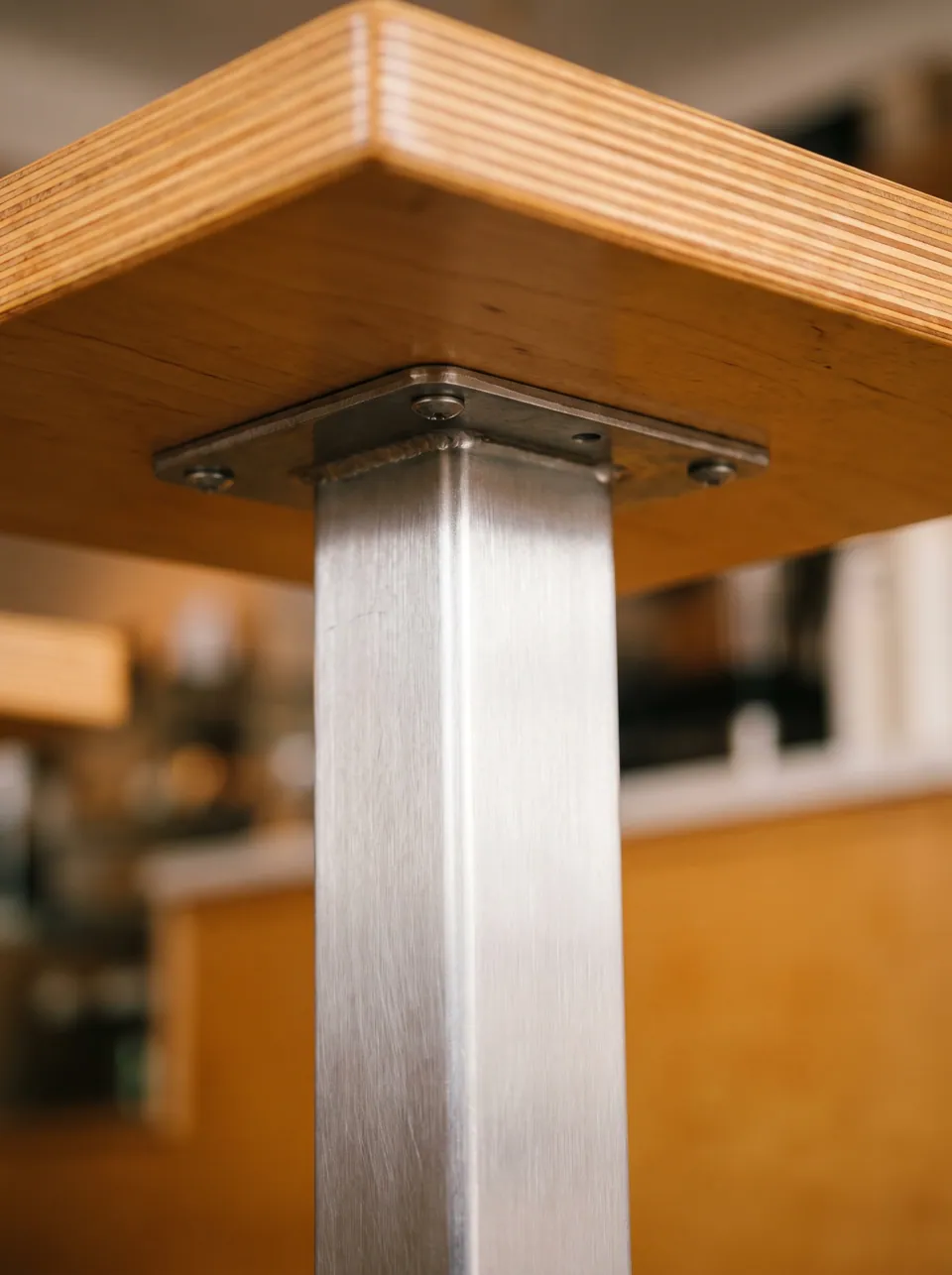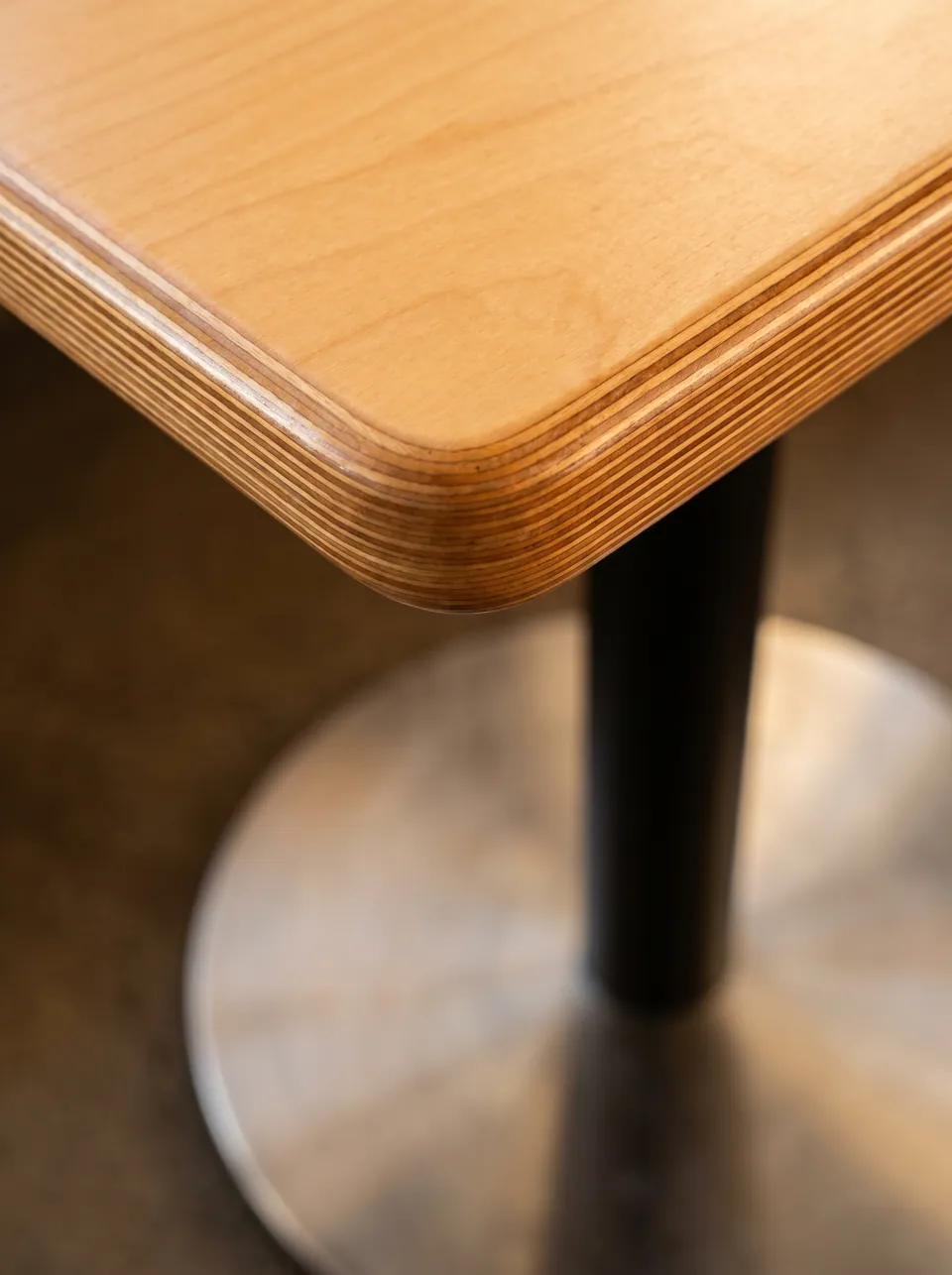
The detail that sells this table is the edge. Instead of hiding the core behind a lipping or a PVC band, the top shows its stacked plywood layers as fine stripes, rounded over at every corner so there is nothing for a hip or a tray to catch. It reads honest and Scandinavian, and it survives knocks better than a thin veneer edge because there is no strip to peel.
The face is a light maple- or birch-tone veneer under a hard commercial lacquer, which handles coffee rings and sanitiser wipes in a quick-service rhythm. Underneath, a black powder-coated steel column drops onto a brushed stainless disc. The disc is heavy and low, so the table stays planted on a single foot and a mop passes around it in one sweep.
Sizing notes
- Square two-tops of 24–28 in (61–71 cm) suit a disc of about 17–18 in (43–45 cm).
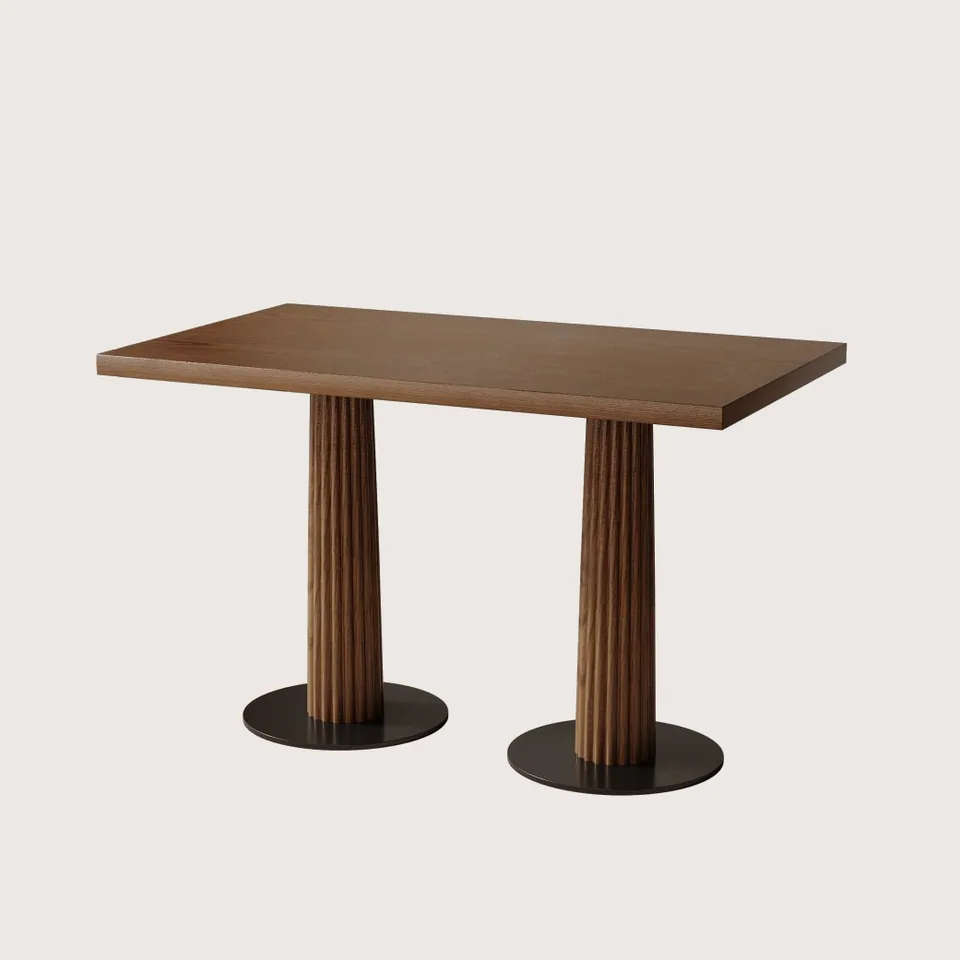
- A 30 in (76 cm) square or a 24 × 32 in (61 × 81 cm) rectangle should step up to a larger disc or a twin-column base.
- Counter (36 in) and bar (42 in) versions use a heavier foot.
Veneer species, sheen and column color can change; the exposed-edge profile stays the same across sizes, so a room of mixed tables still reads as one family.