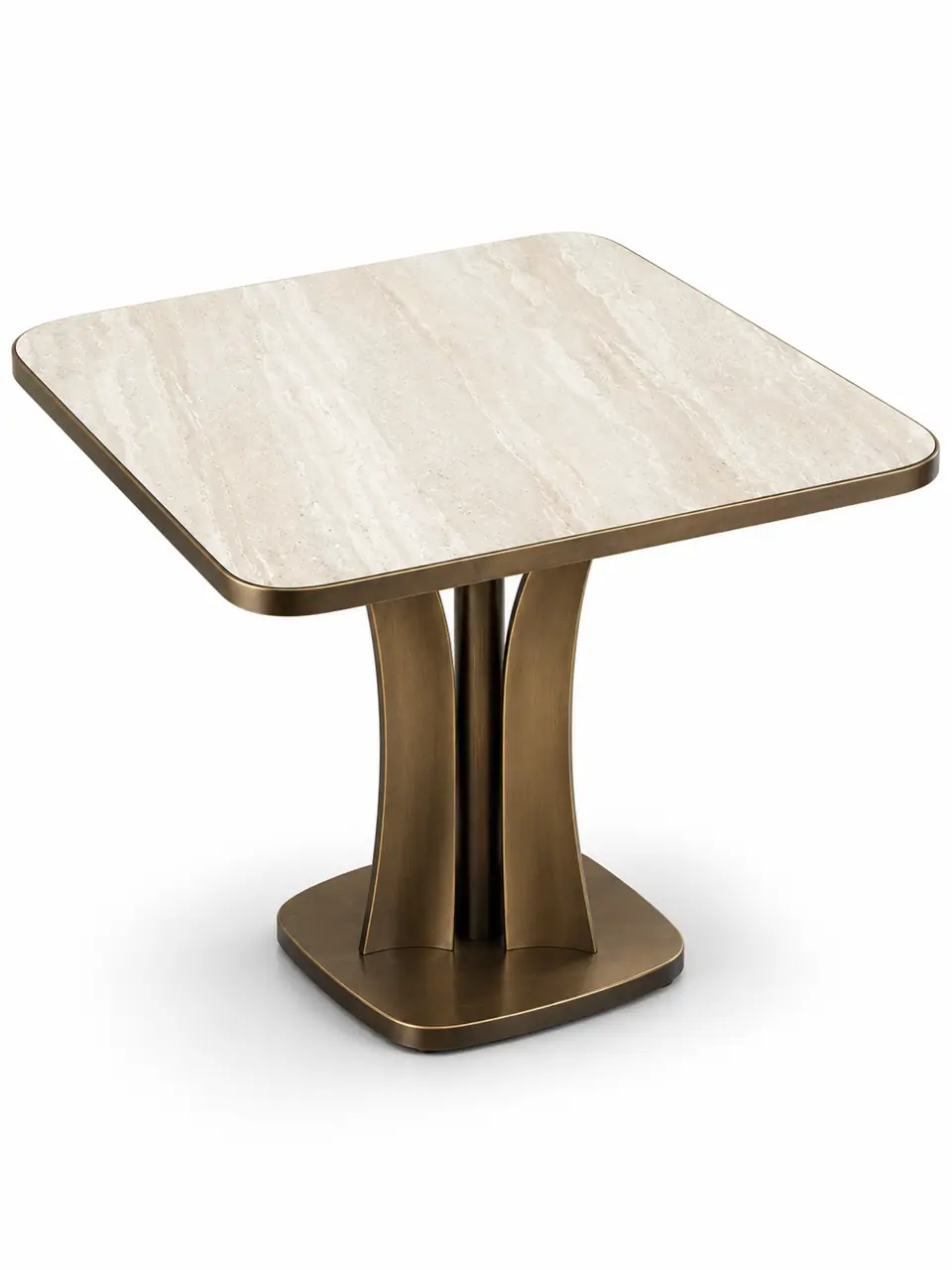
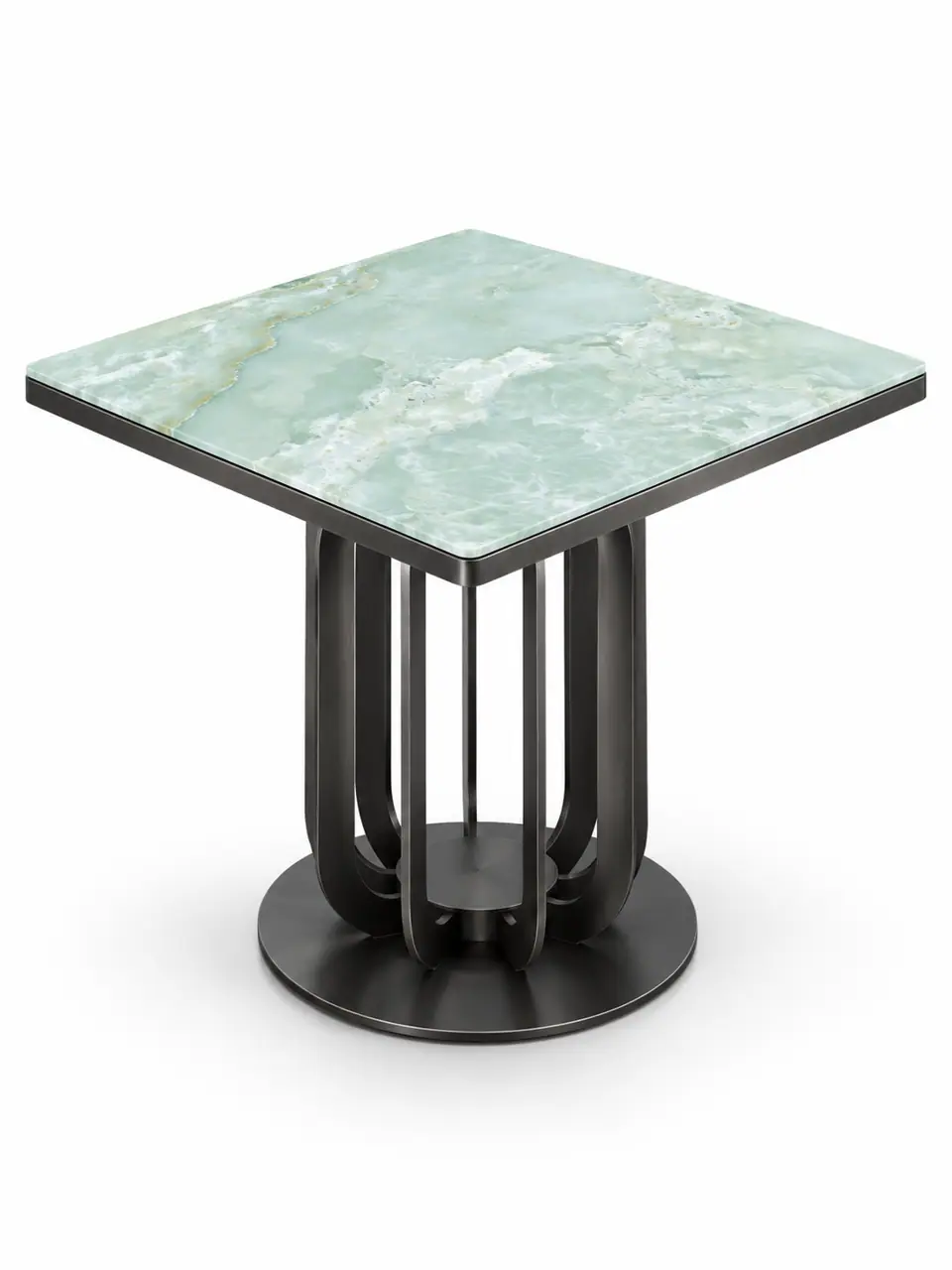
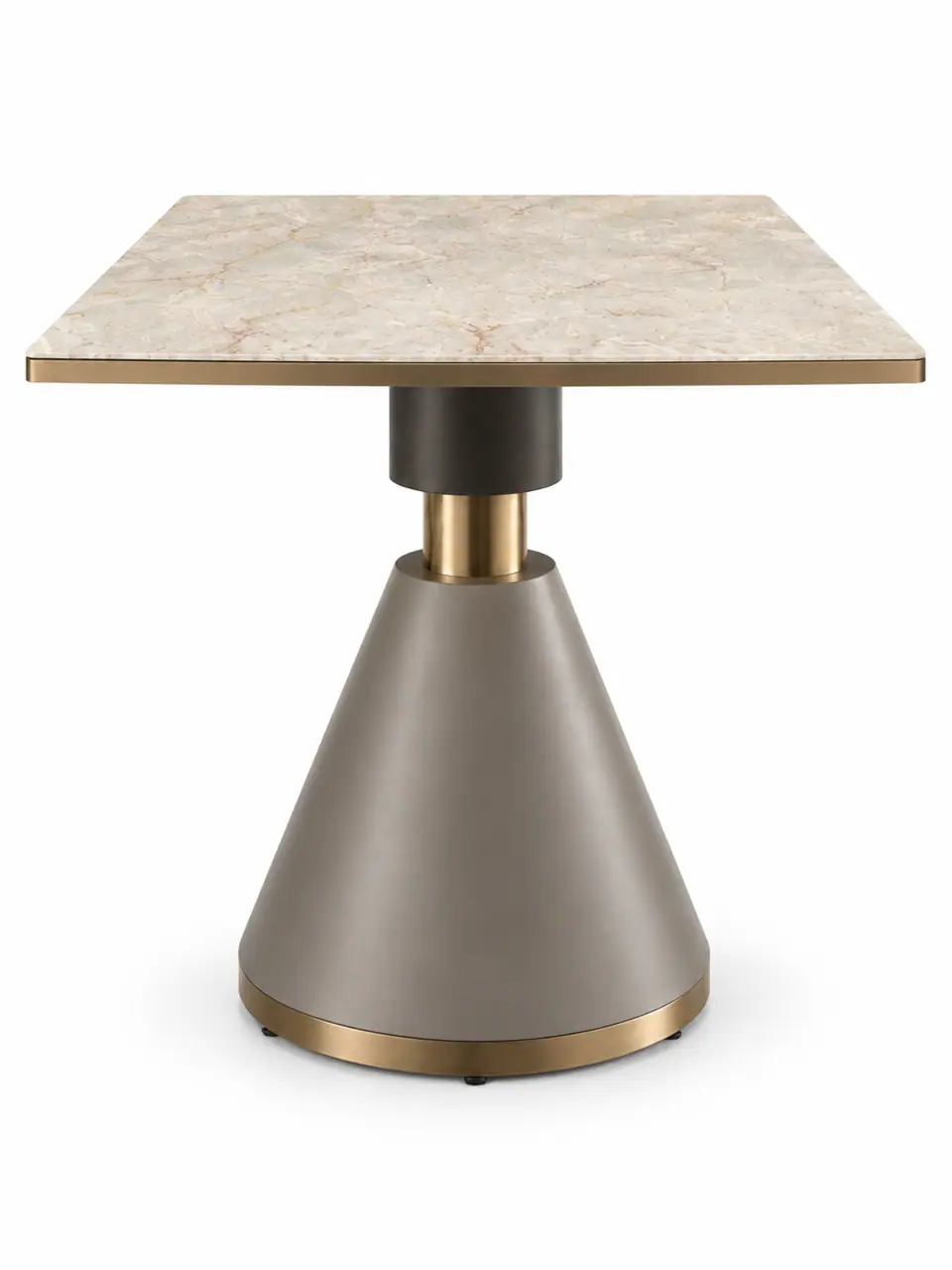
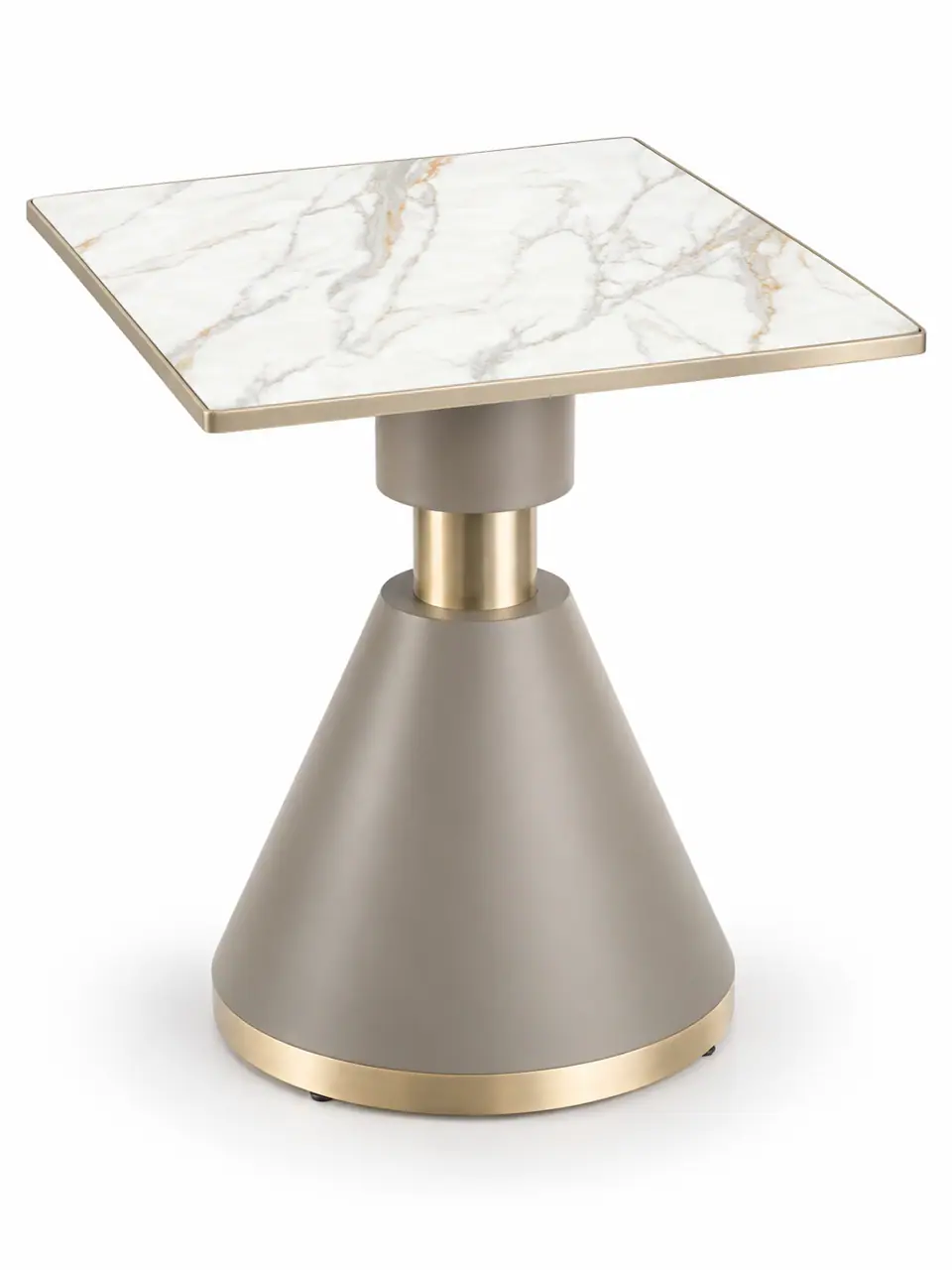
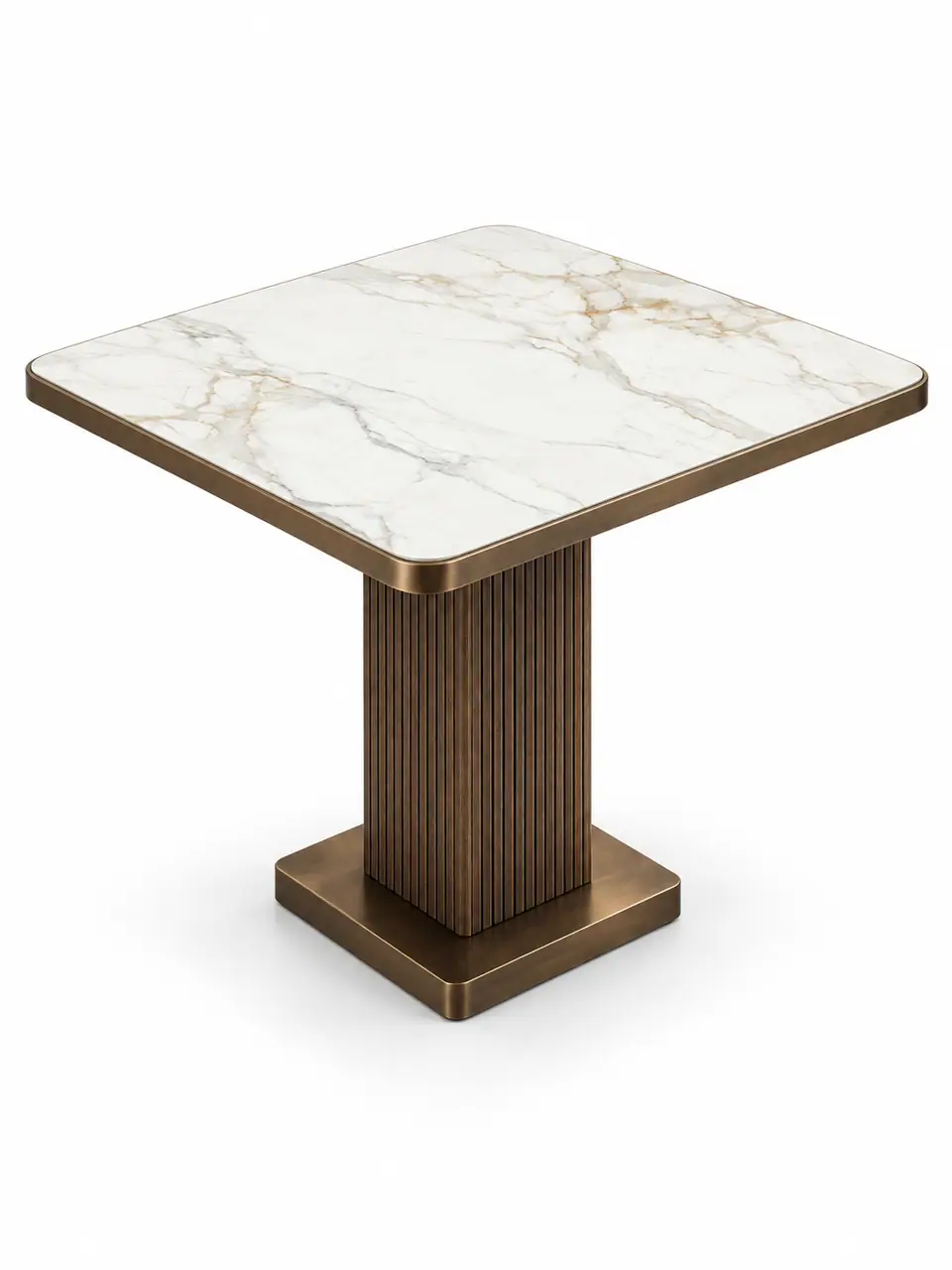
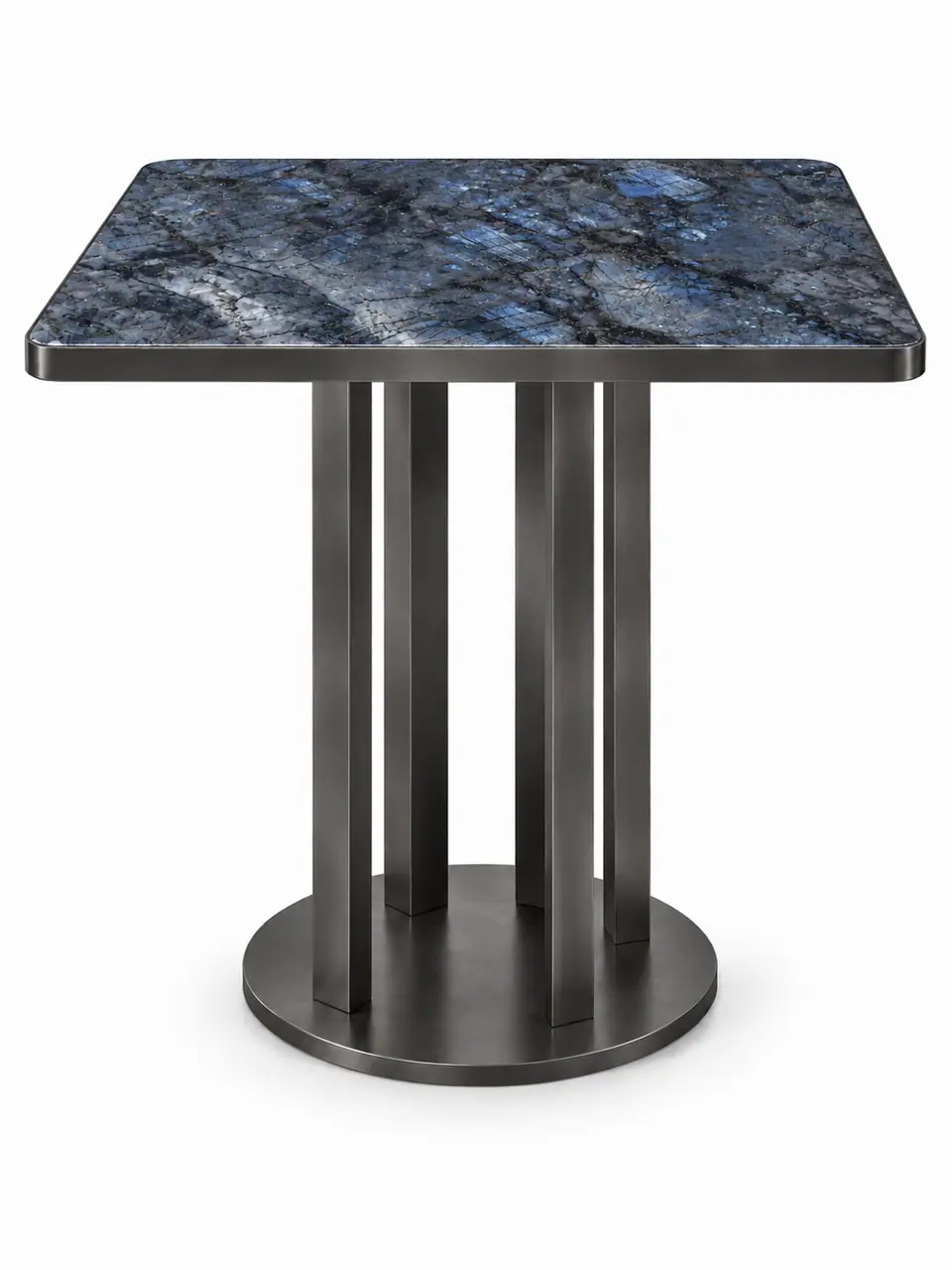
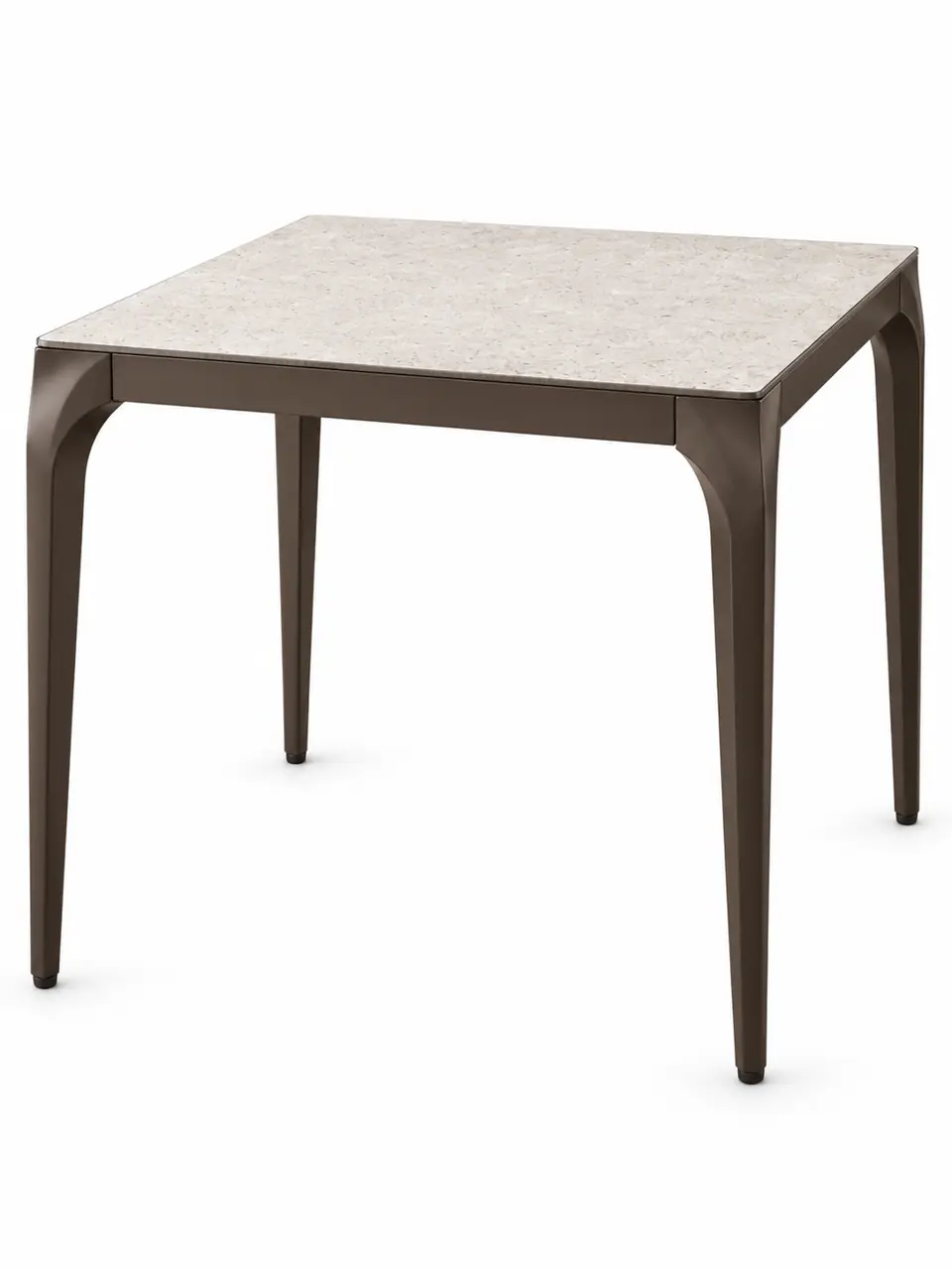
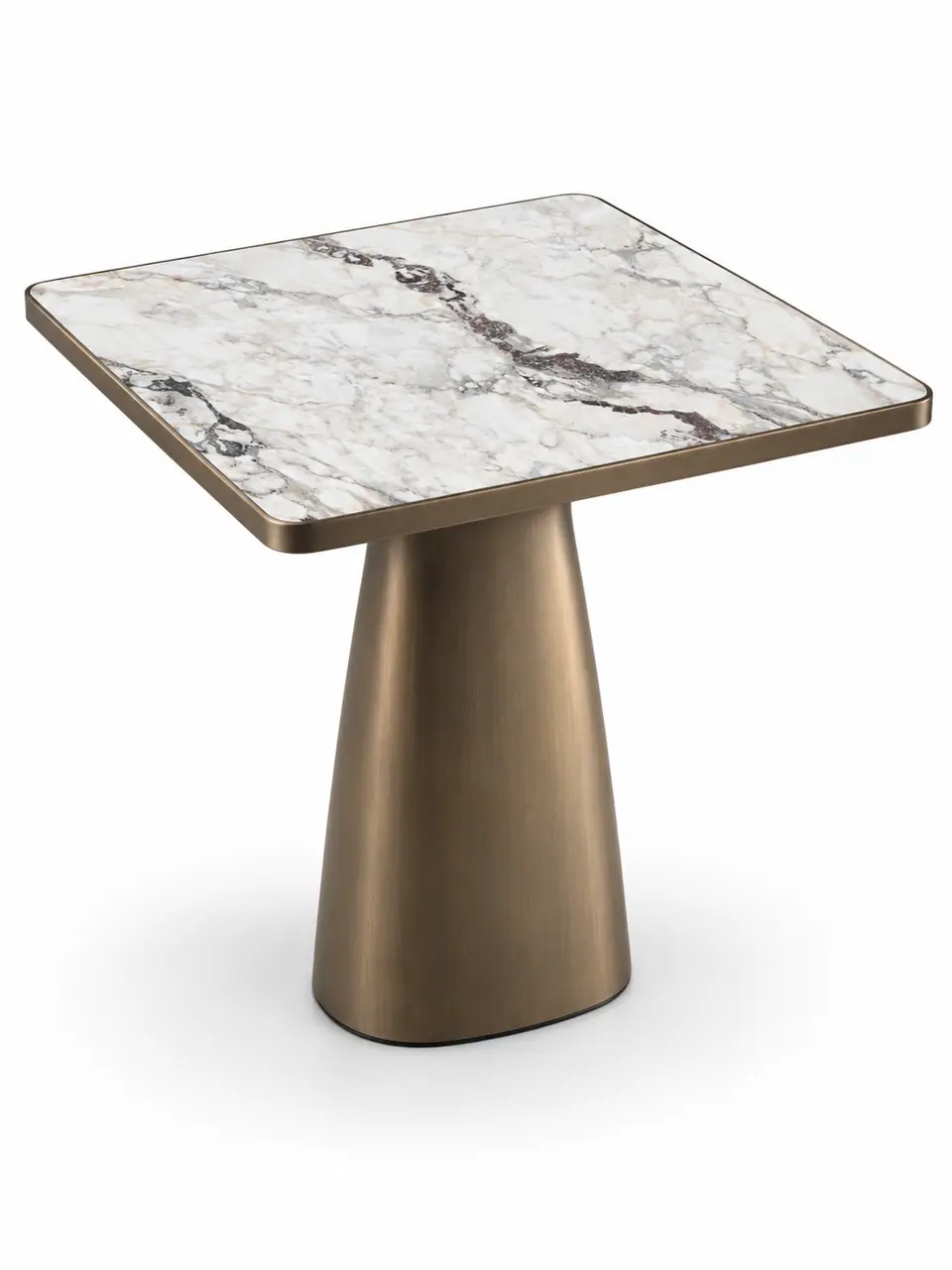
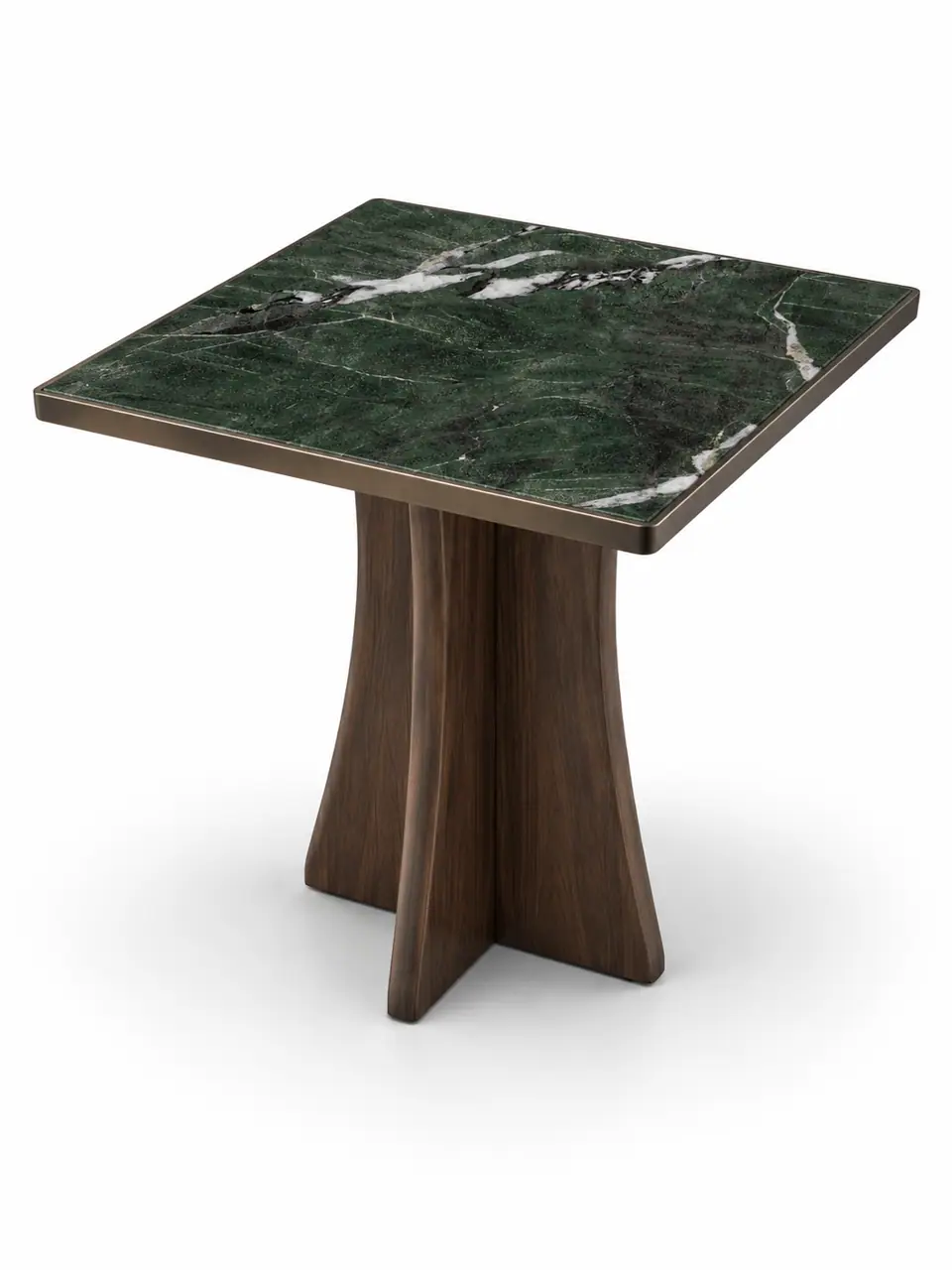
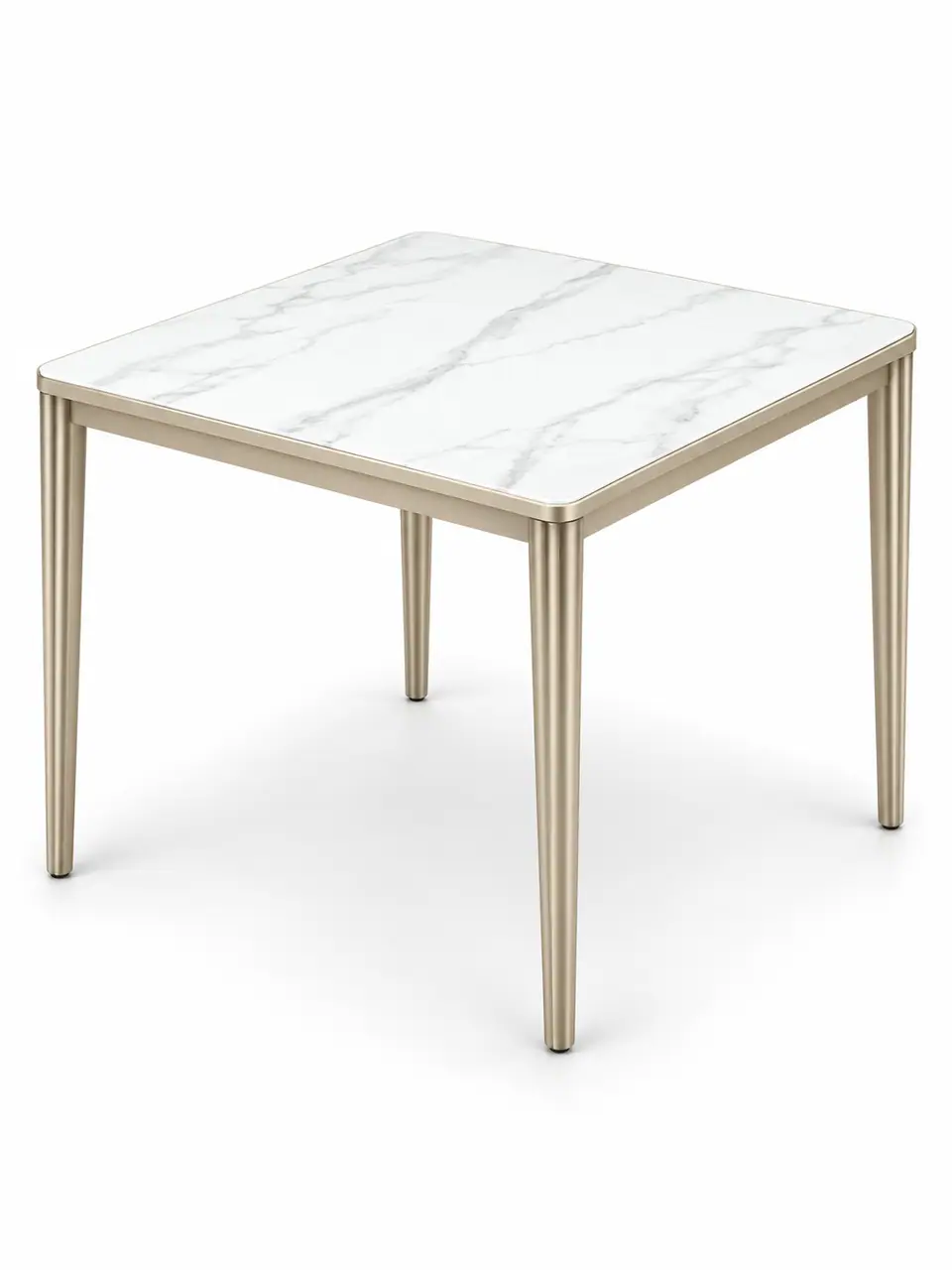
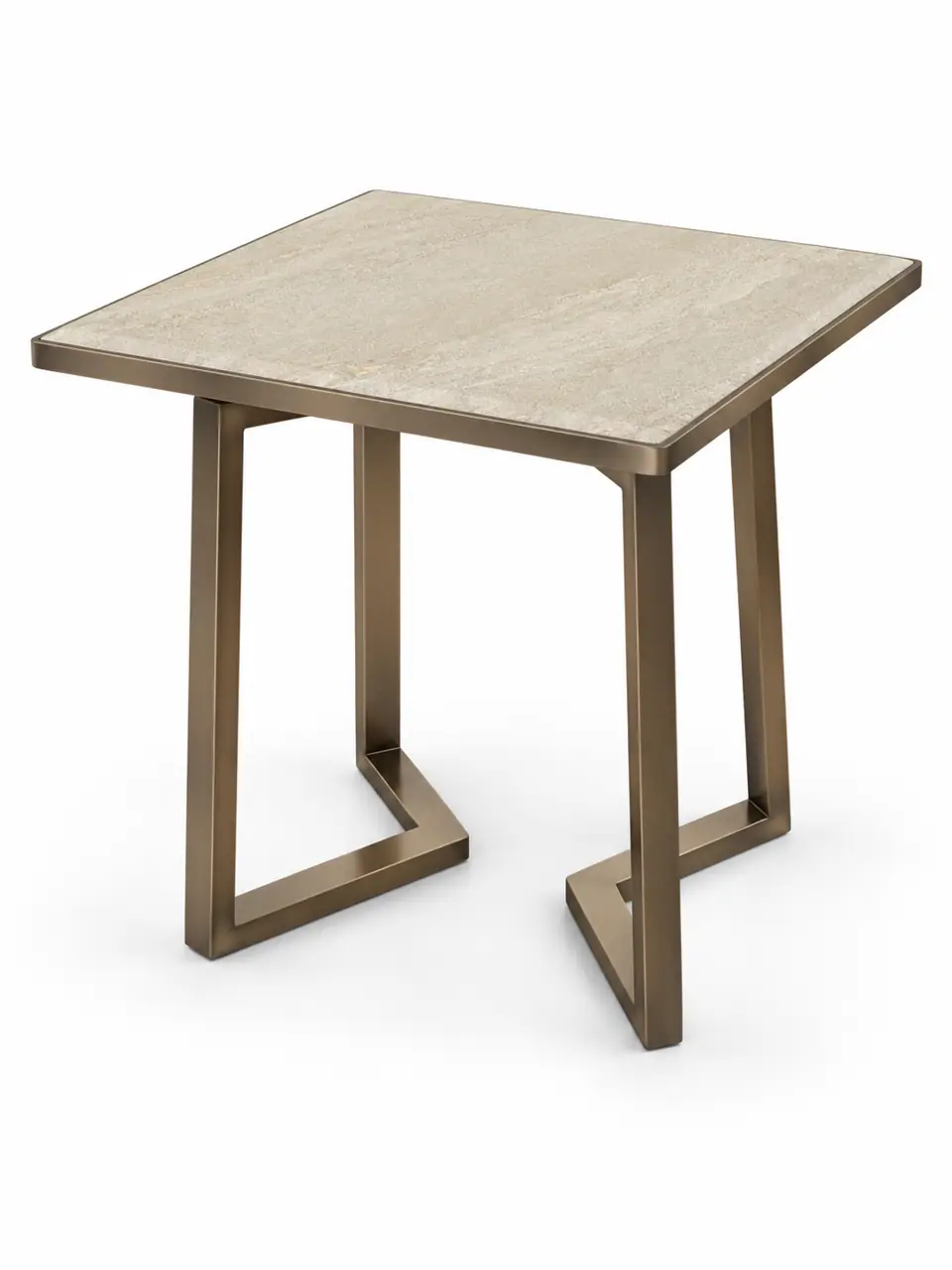
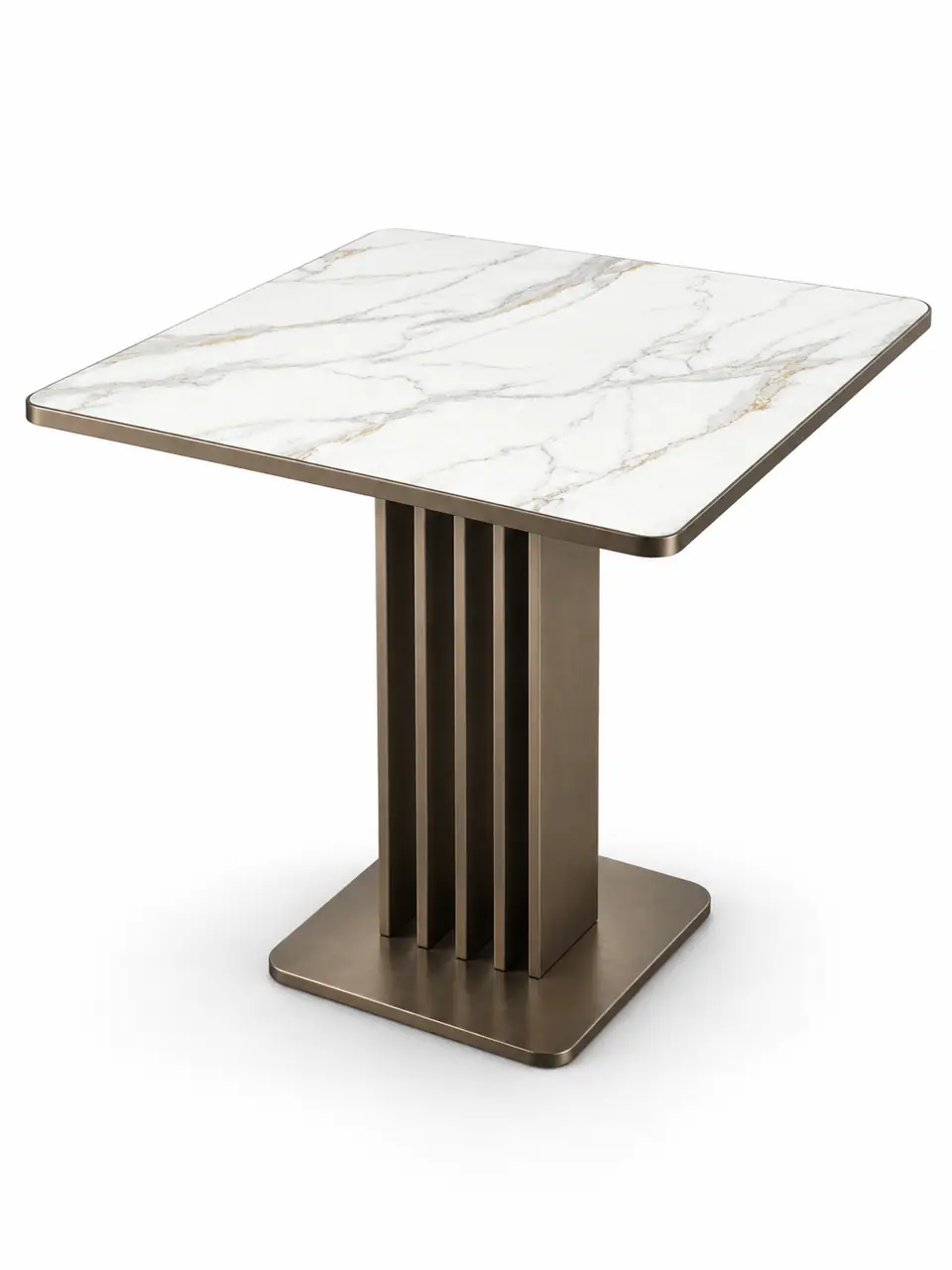
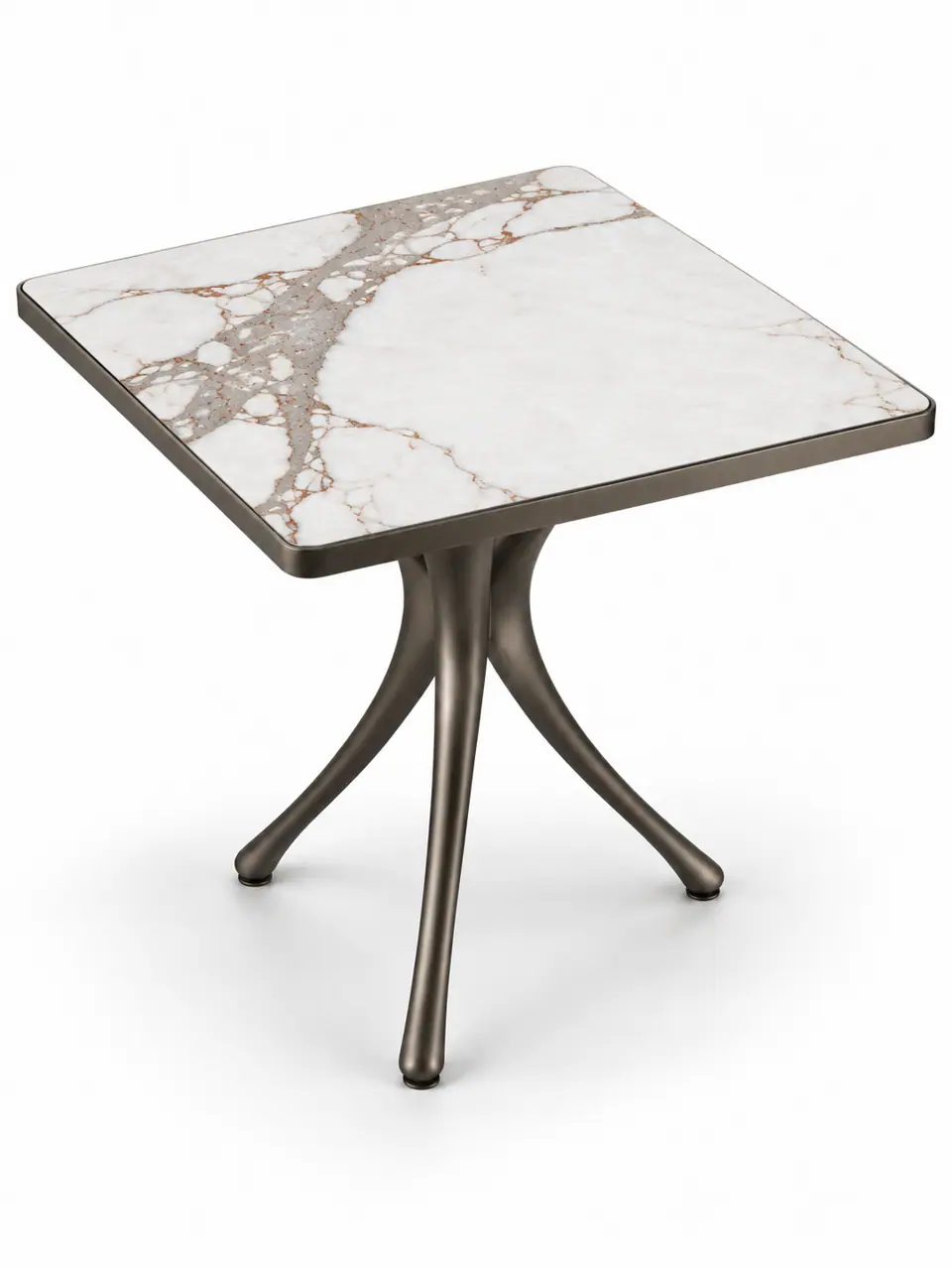
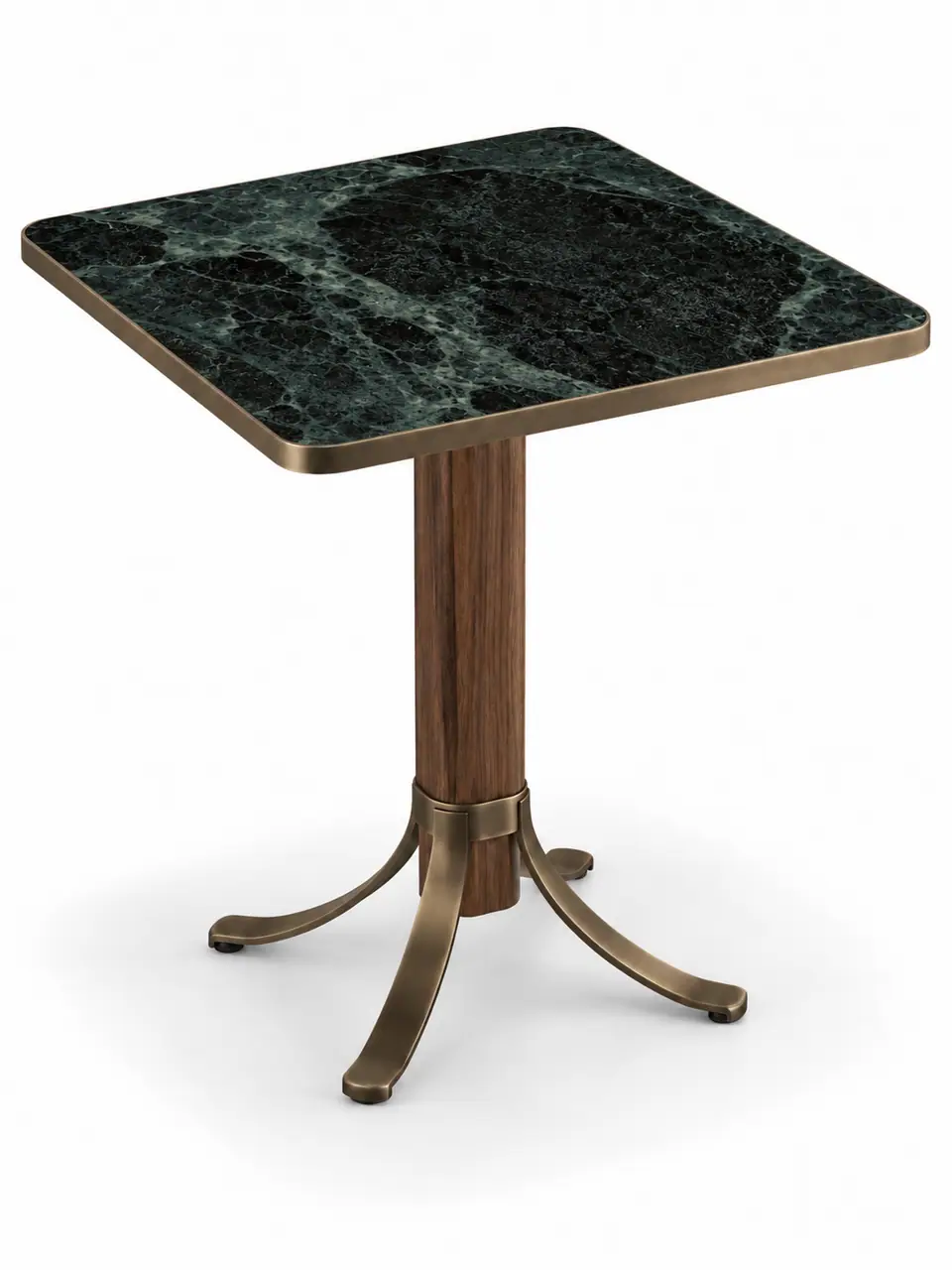
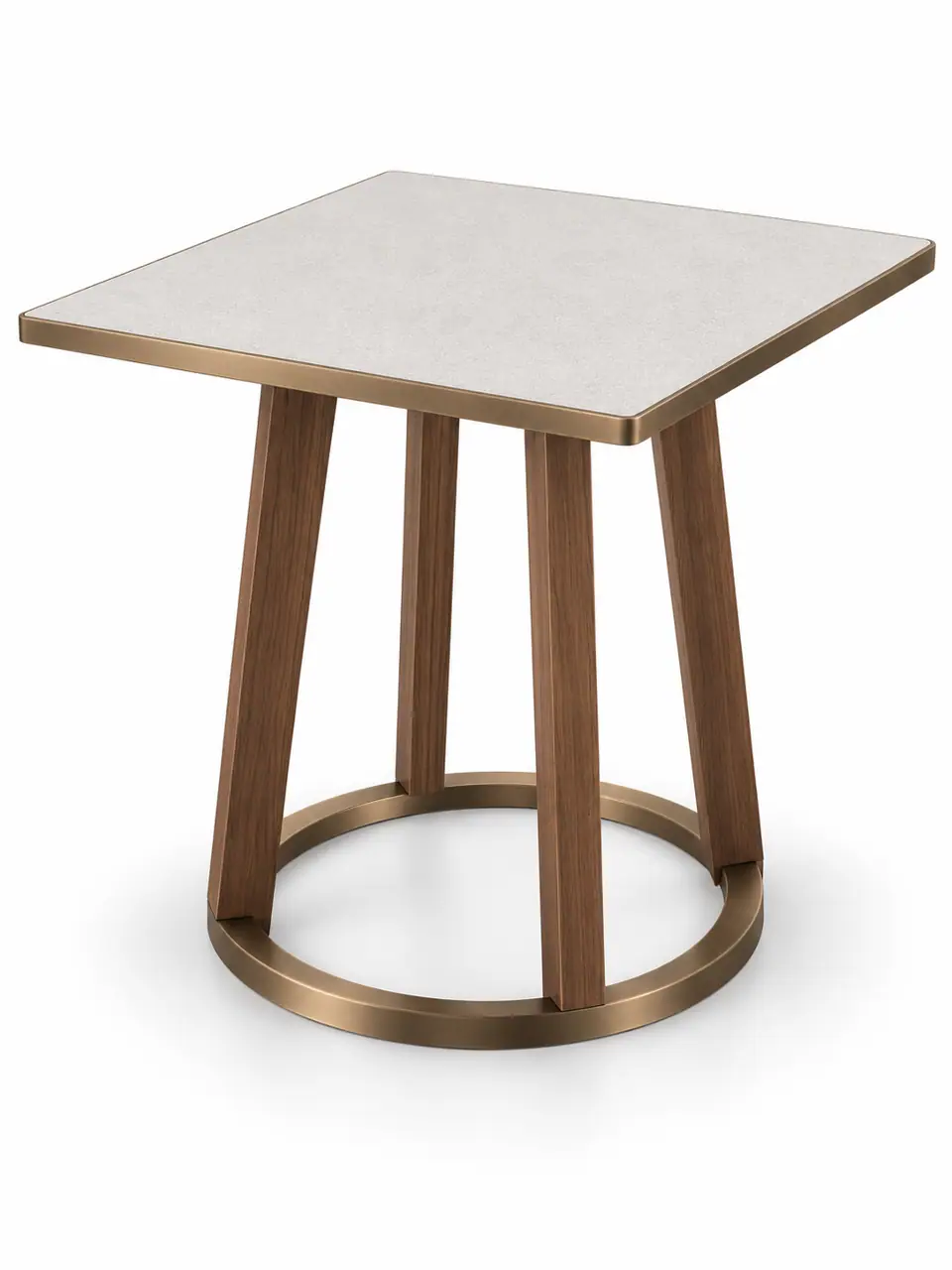
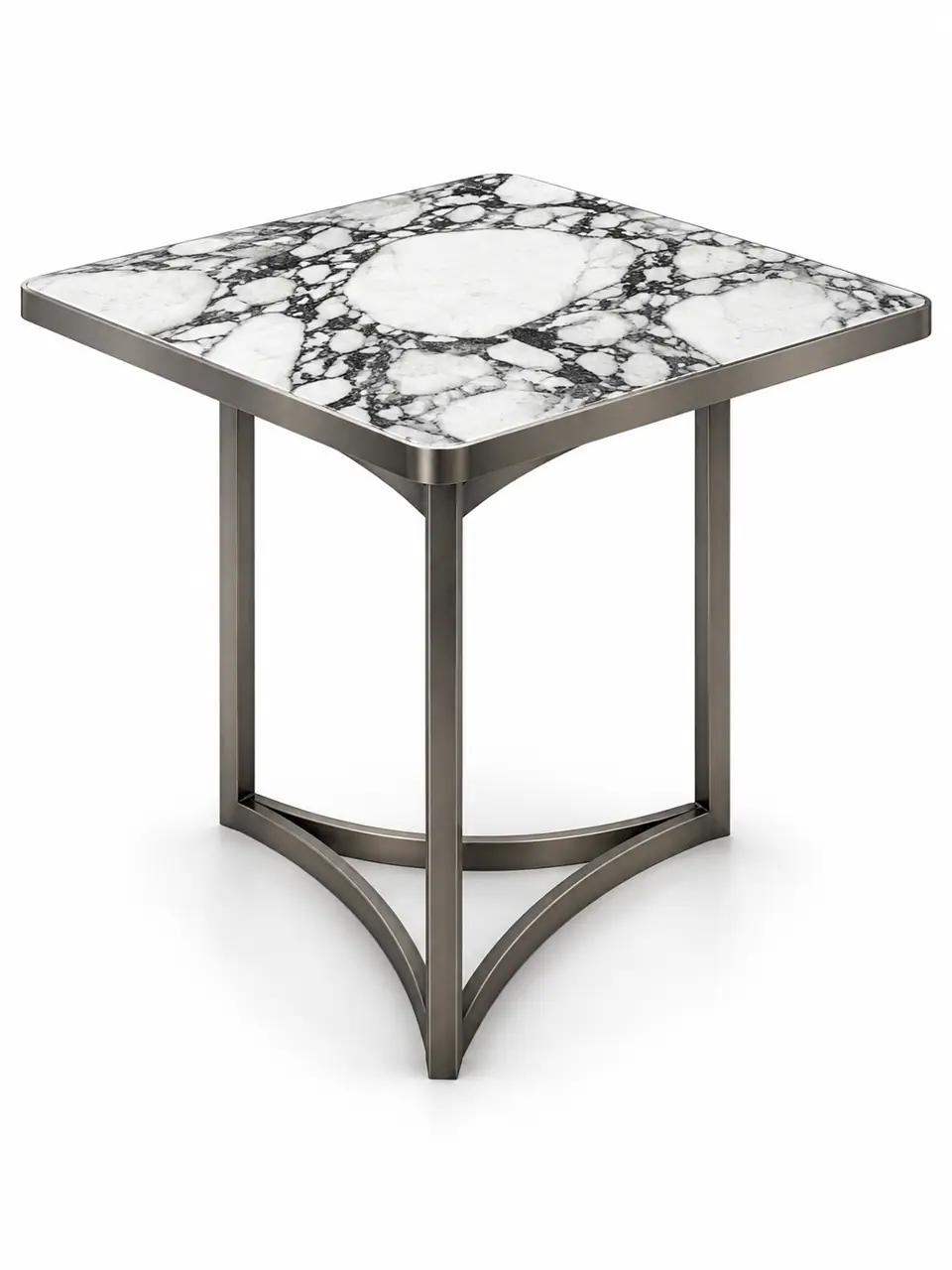
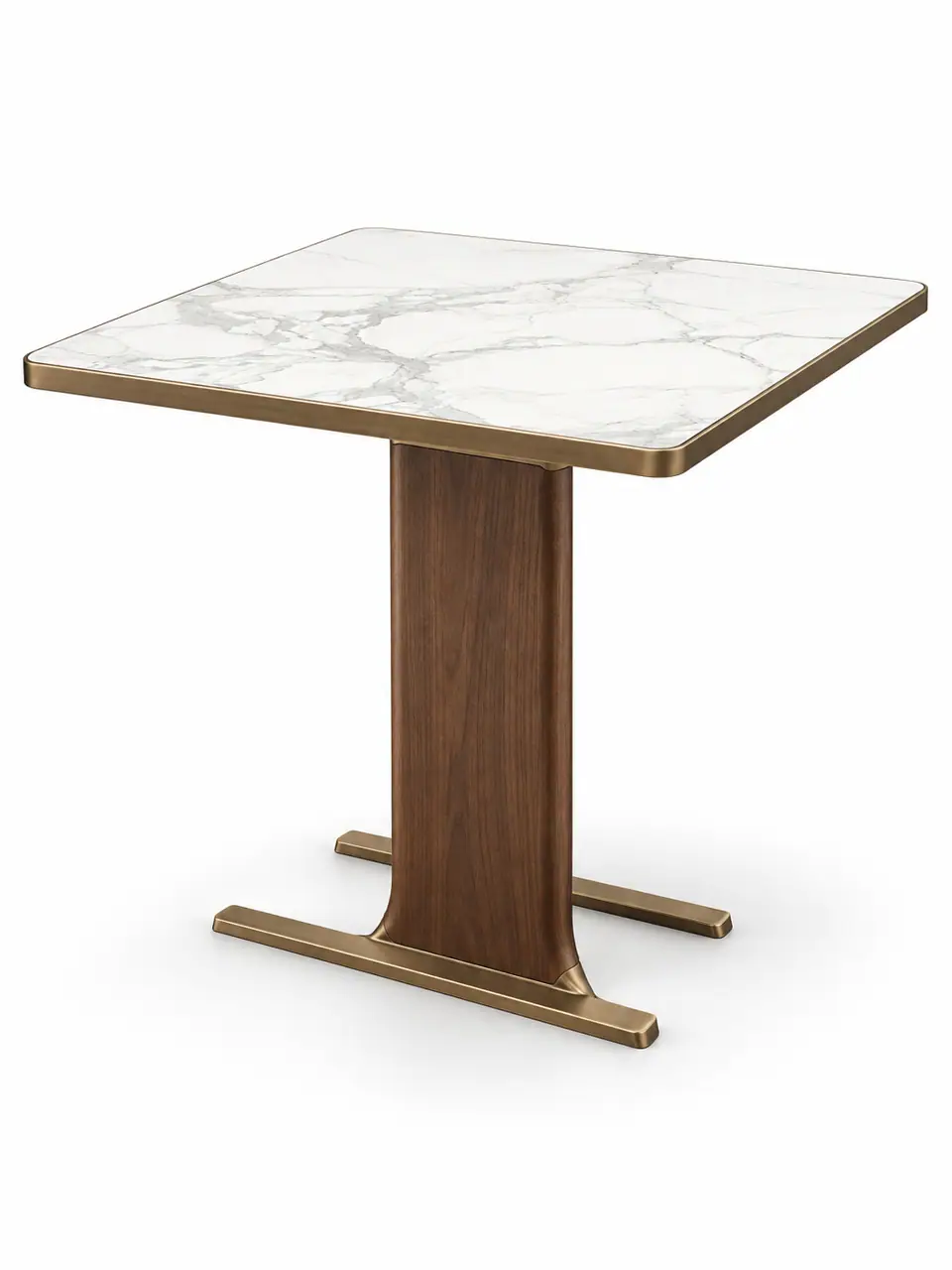
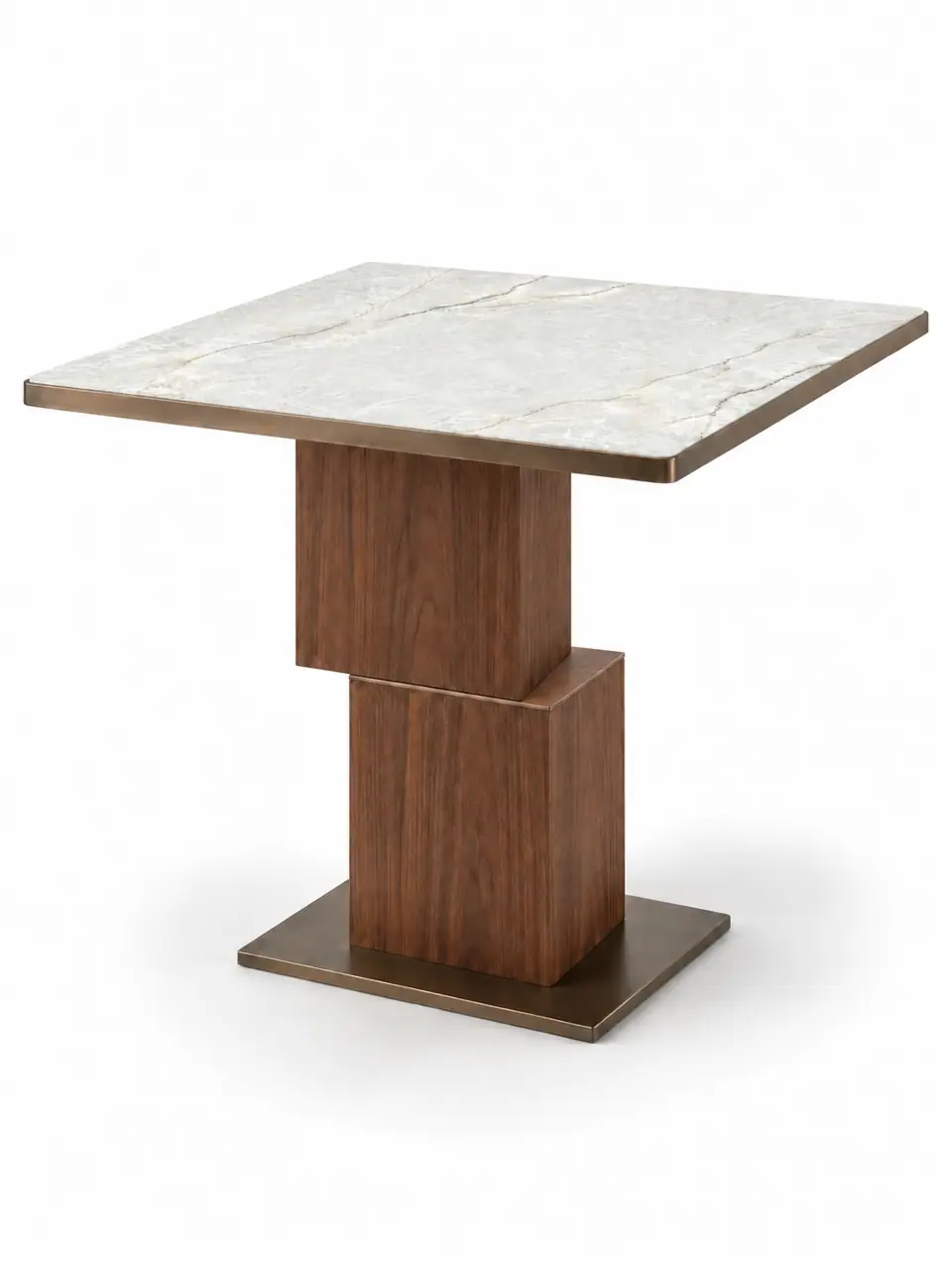
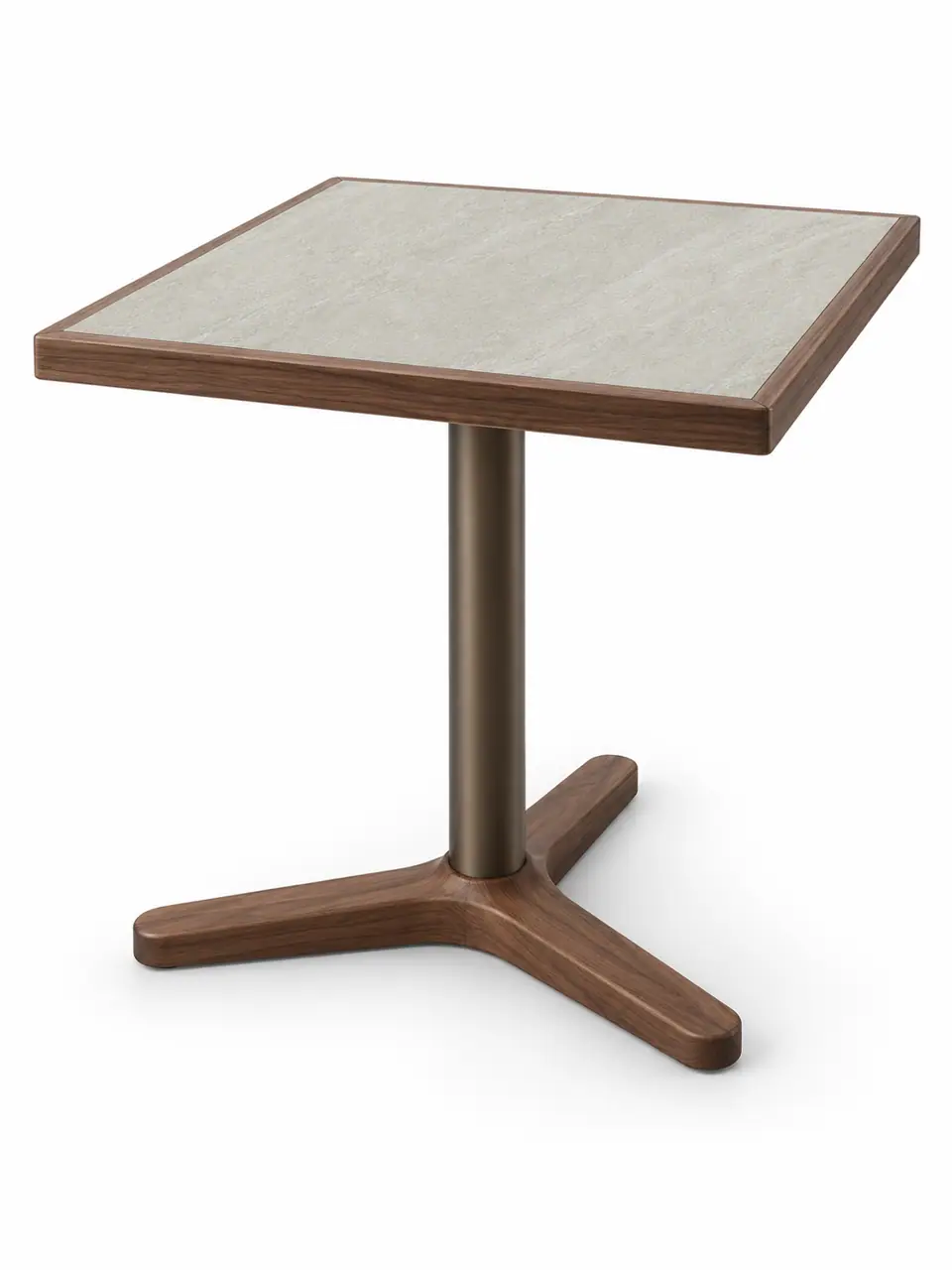
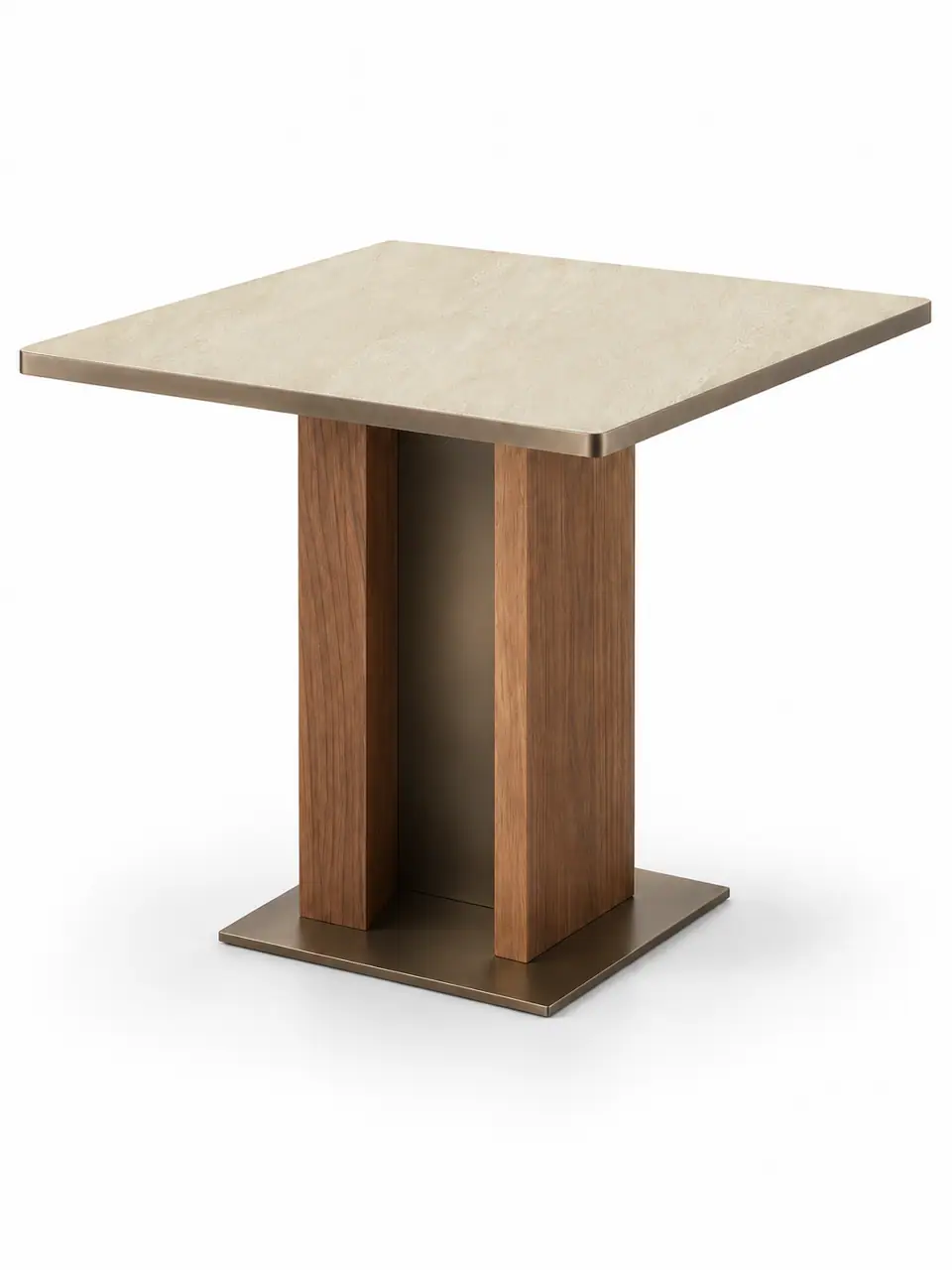
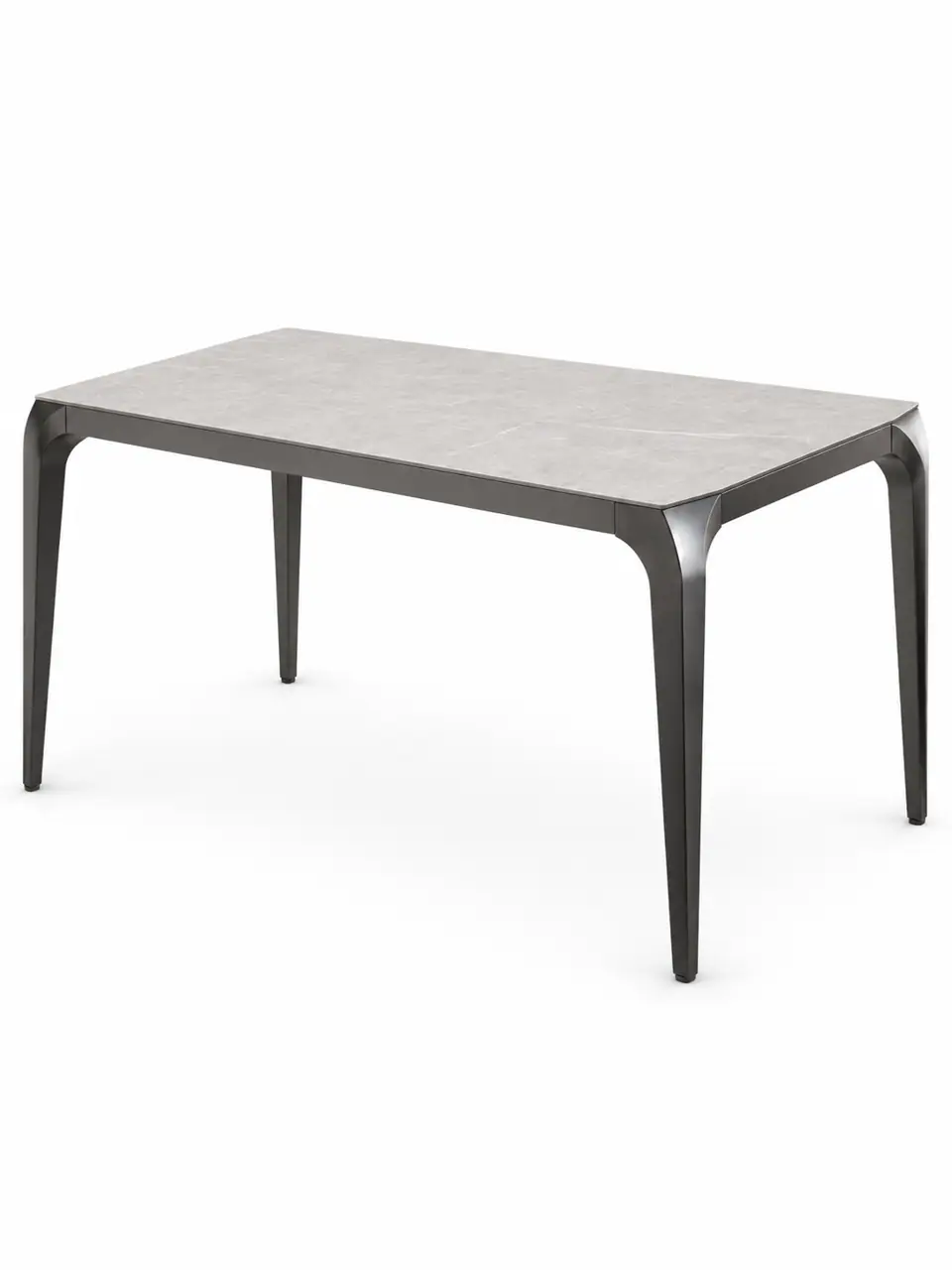
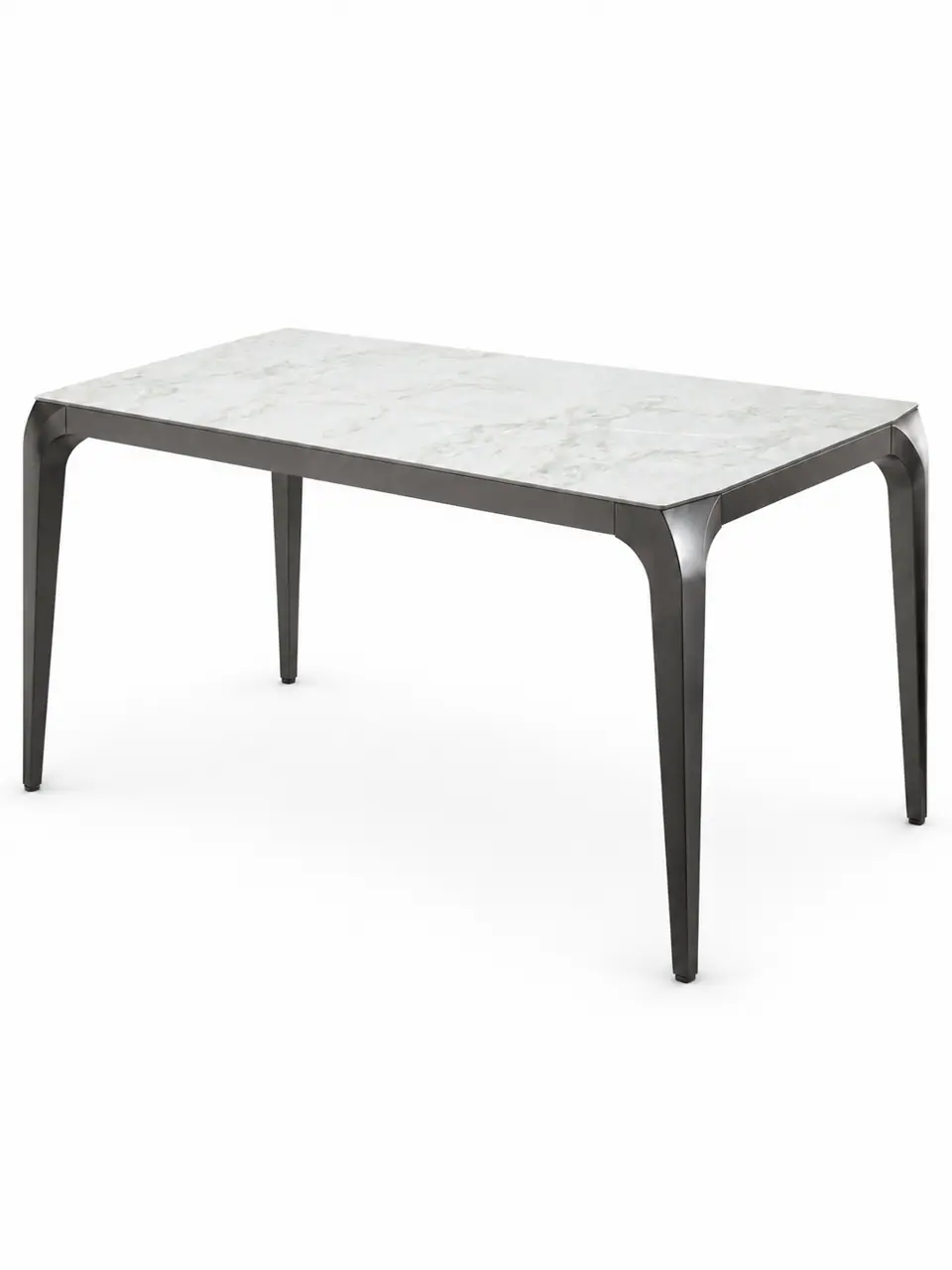
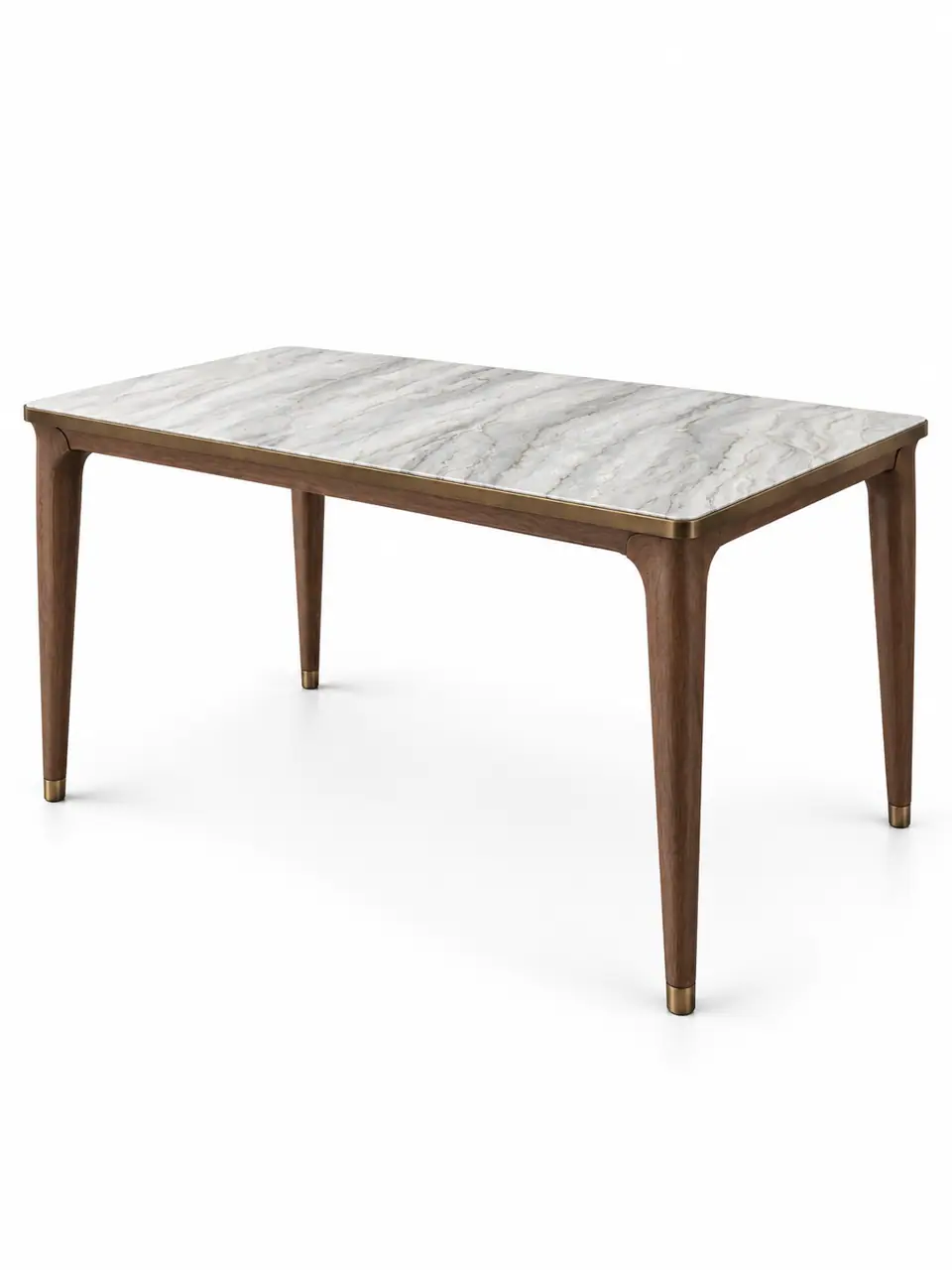
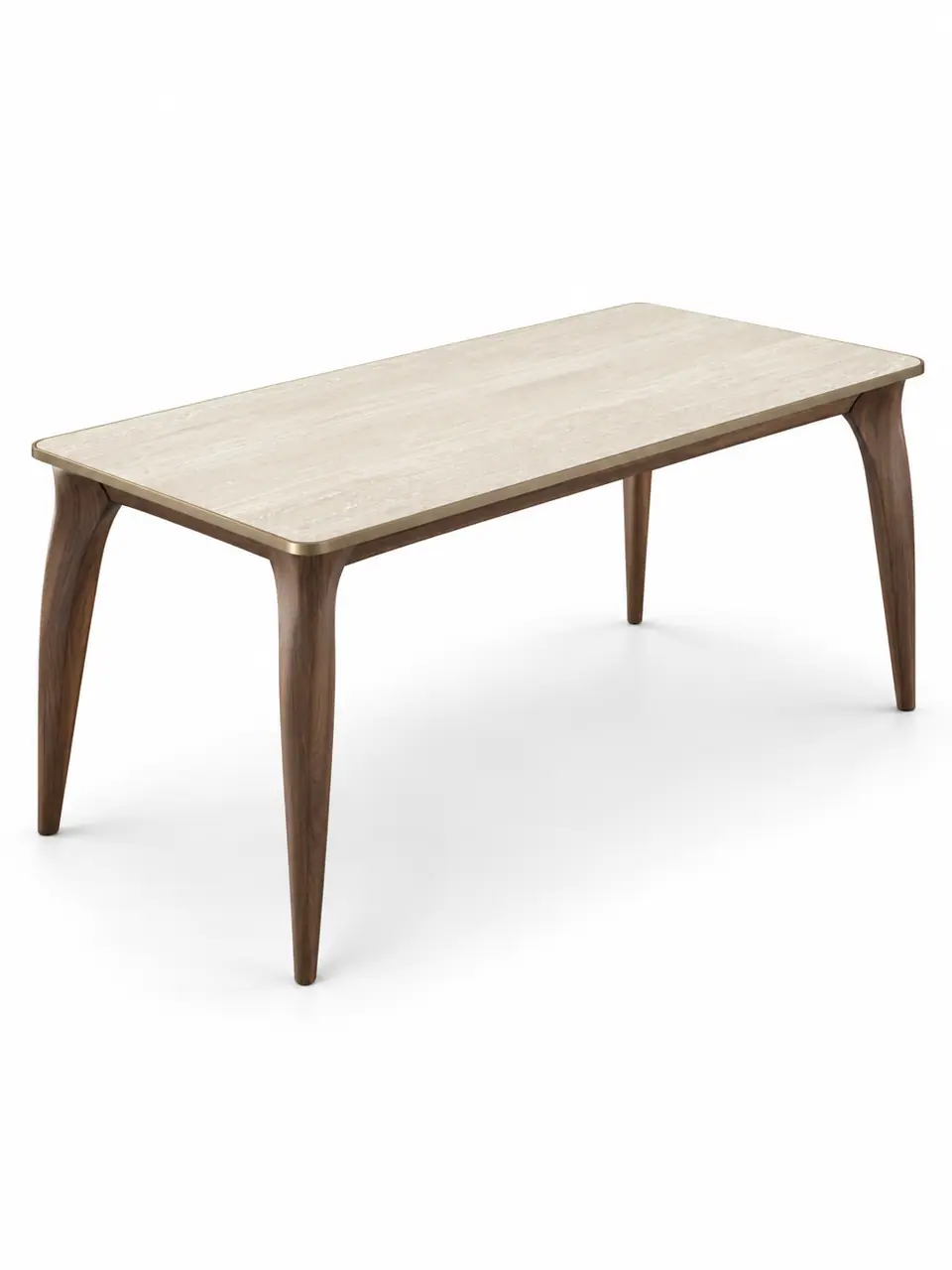
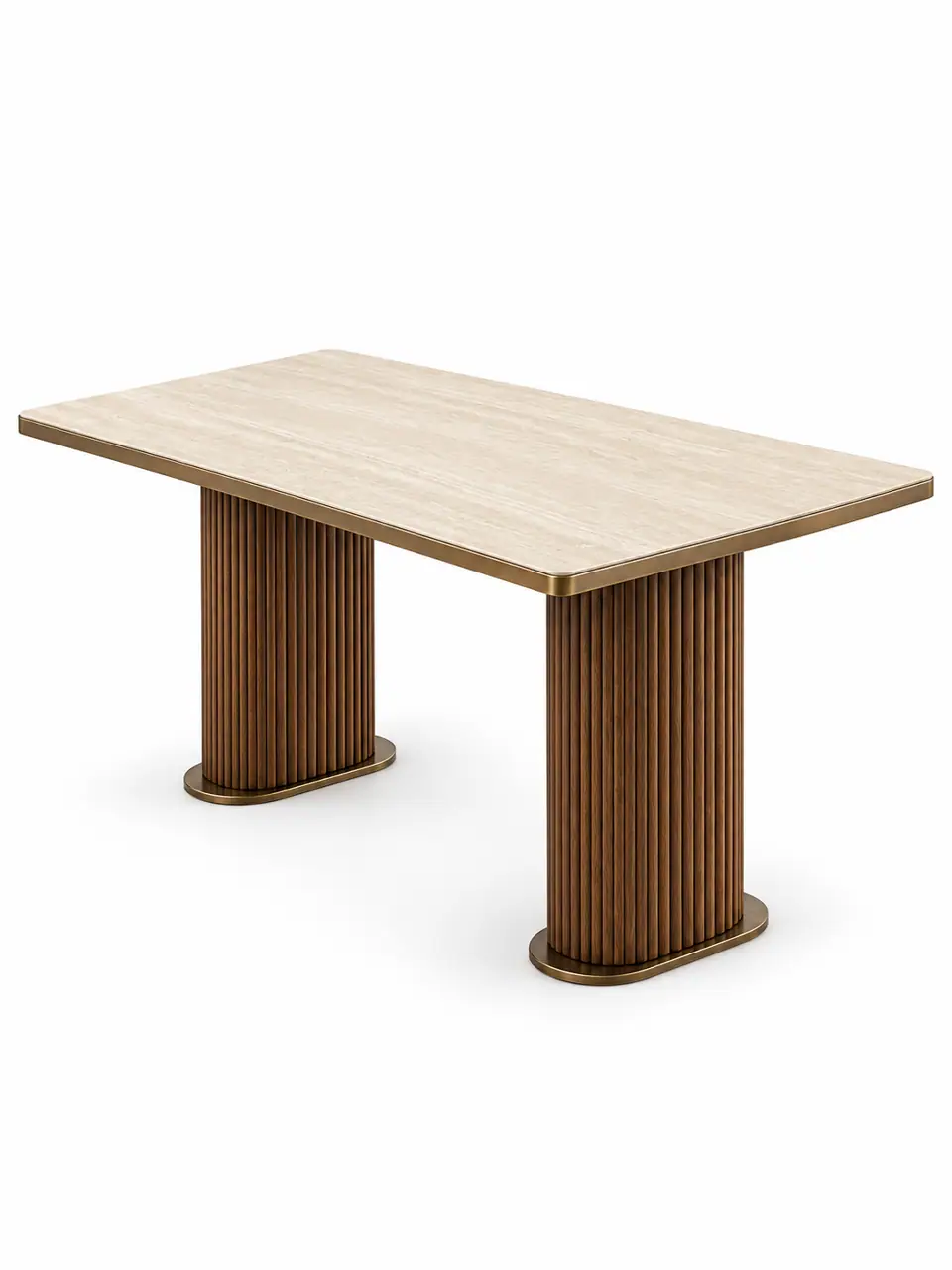
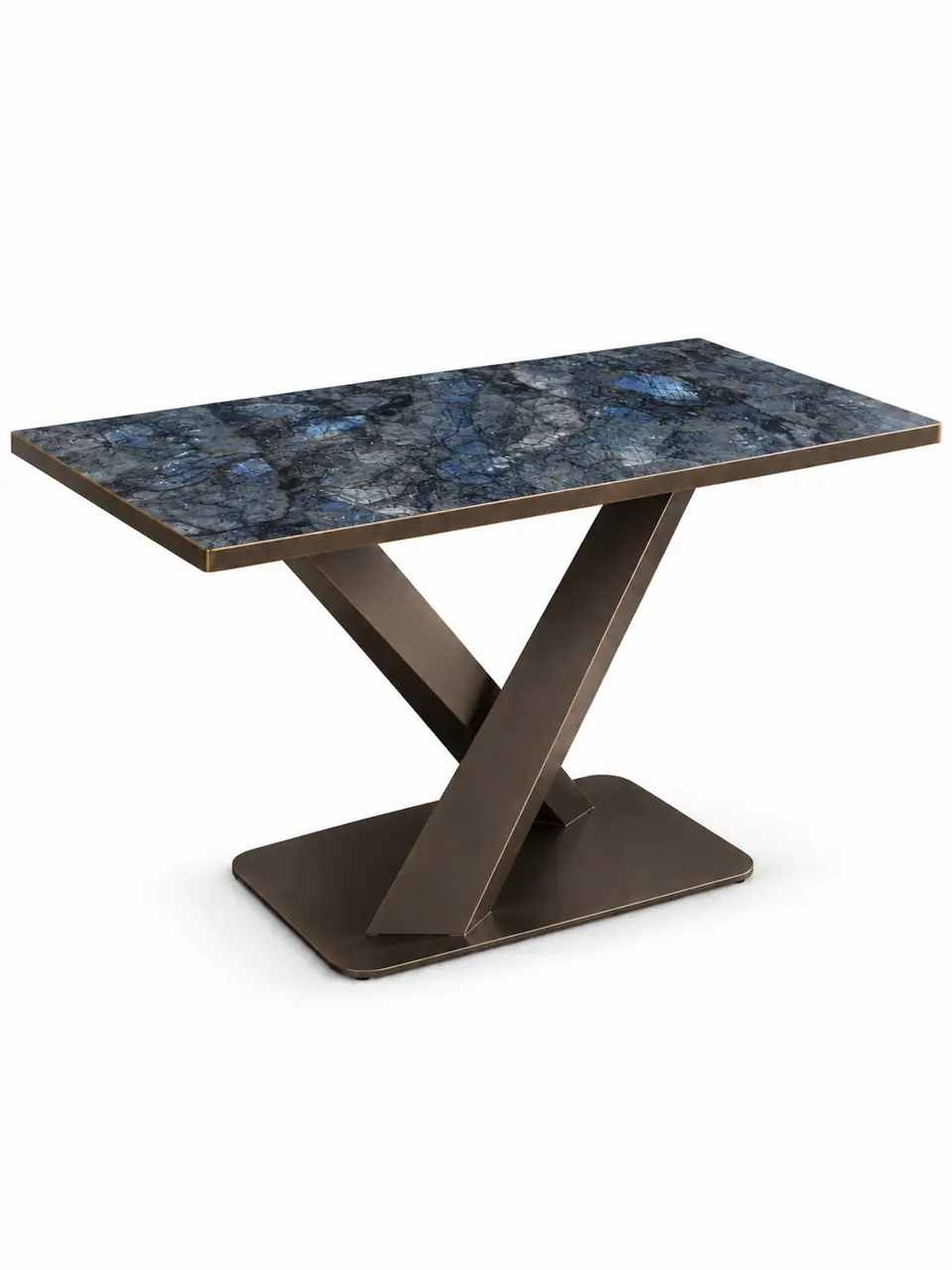
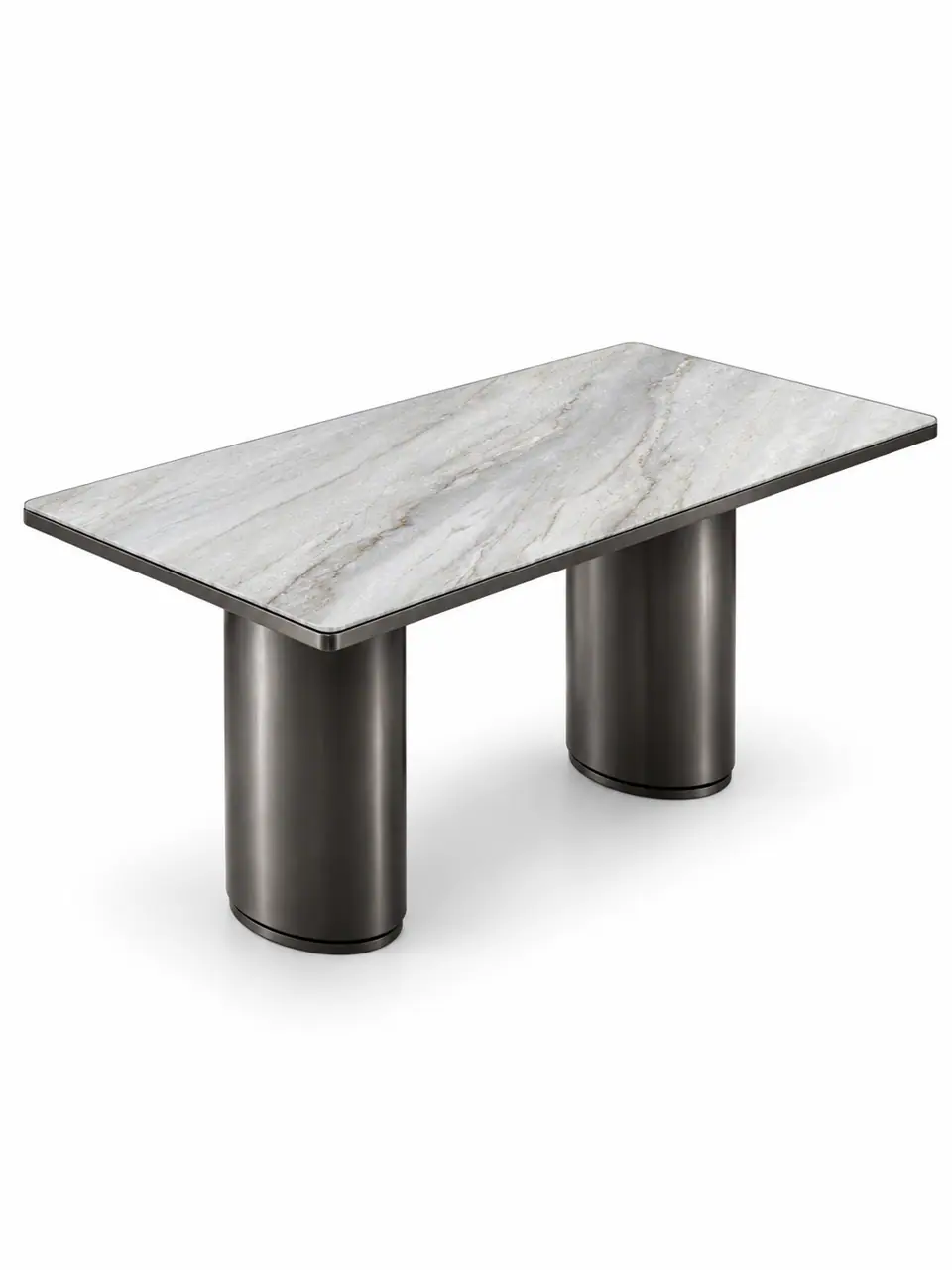
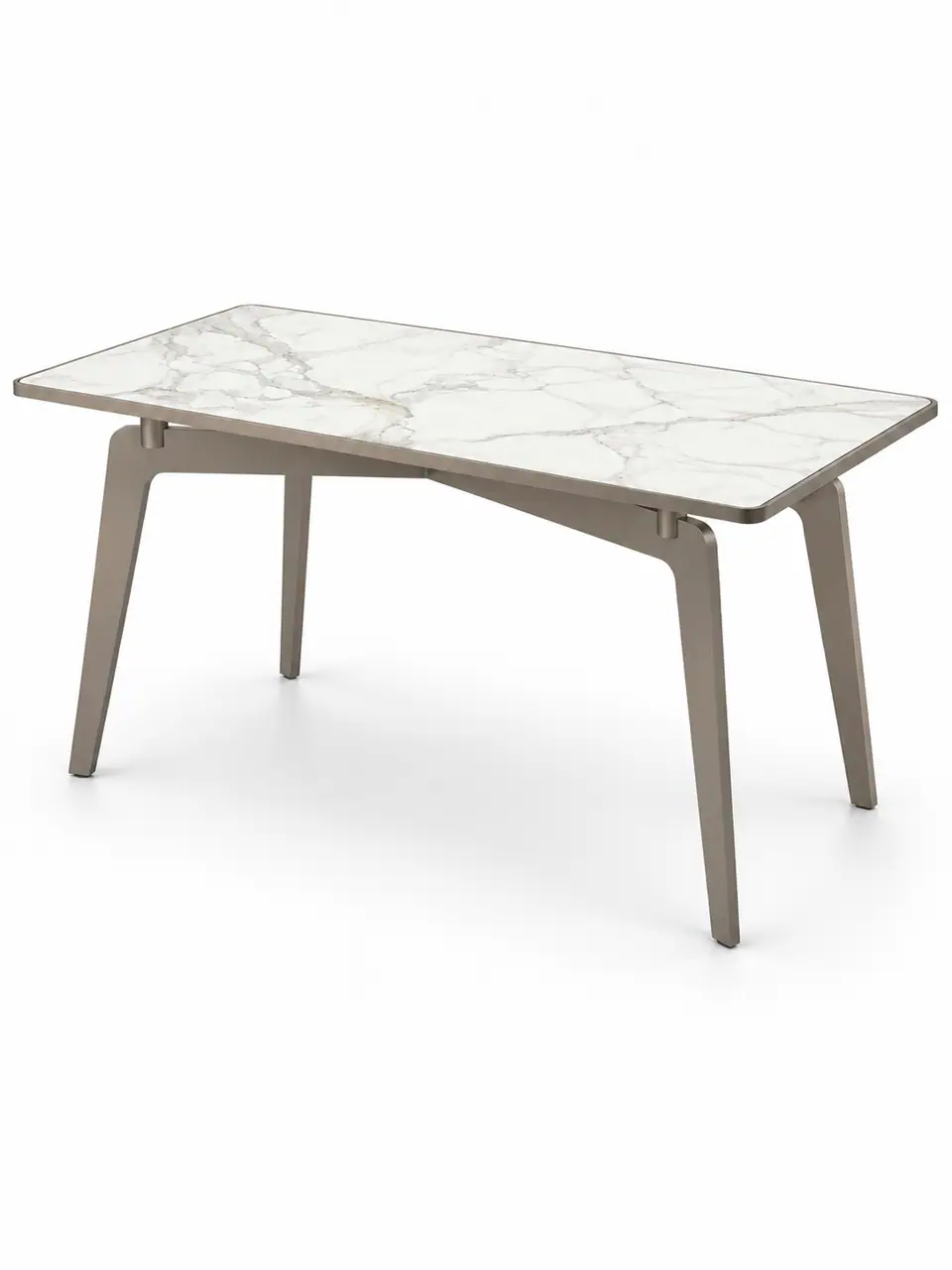
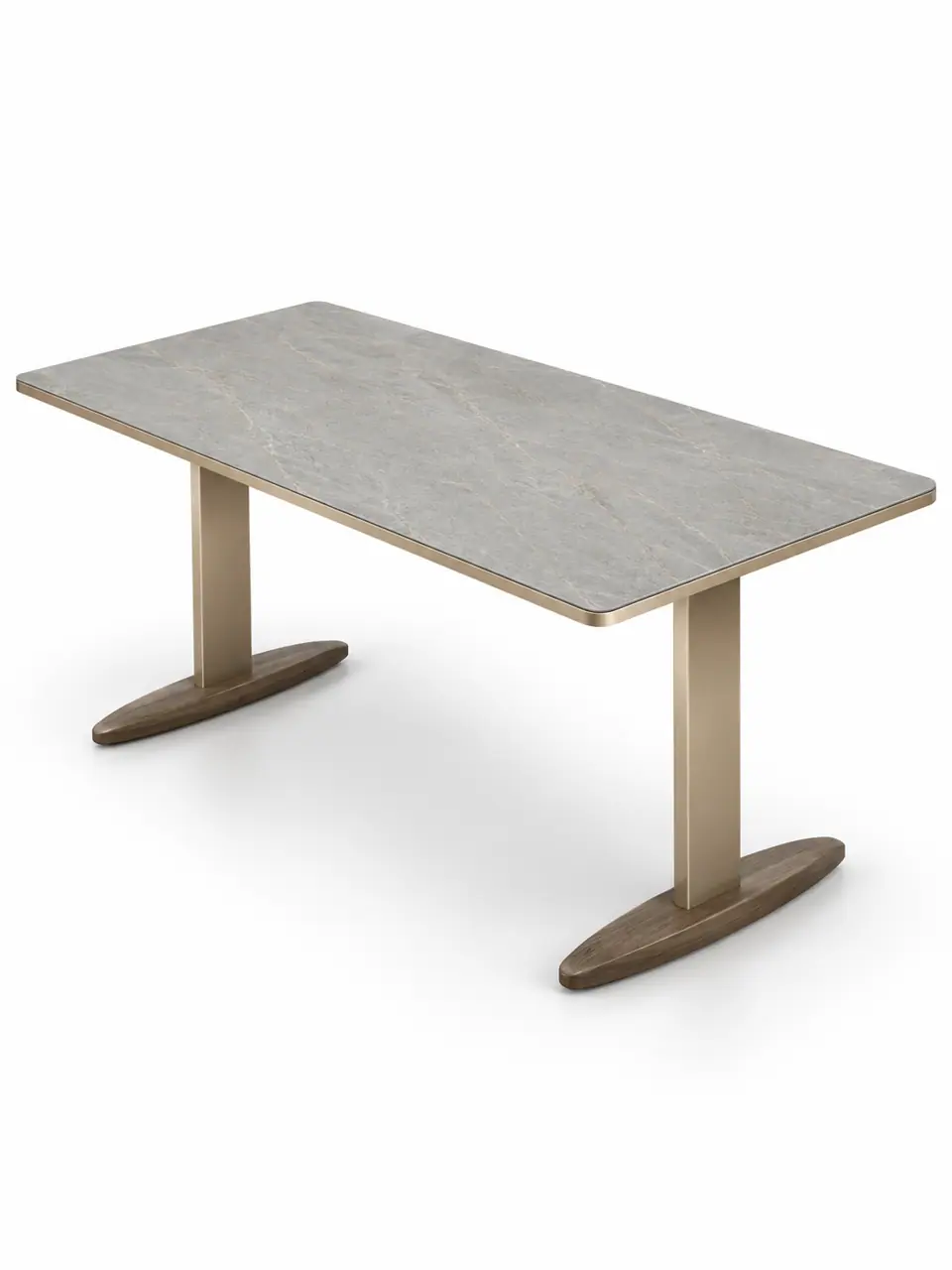
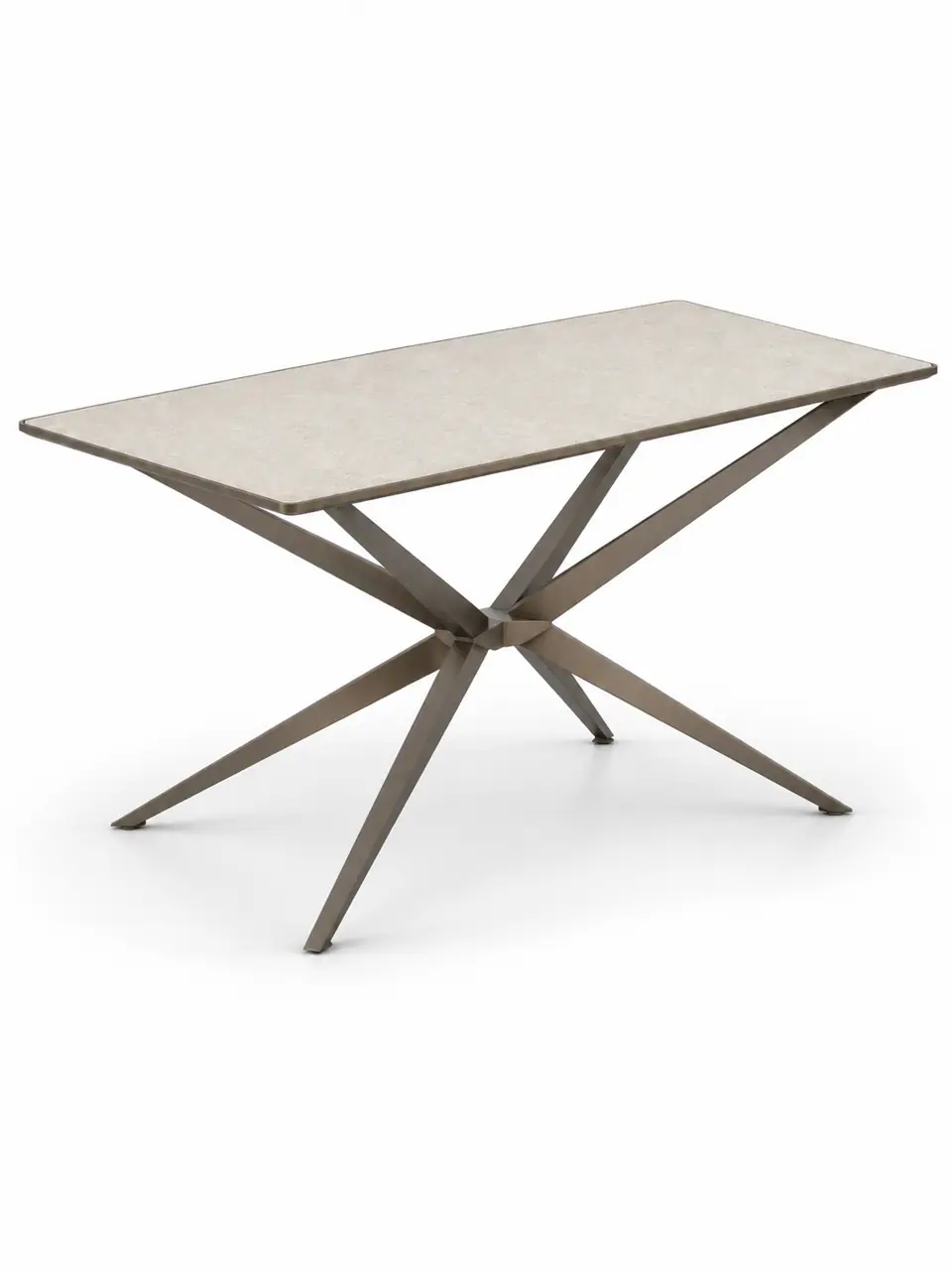
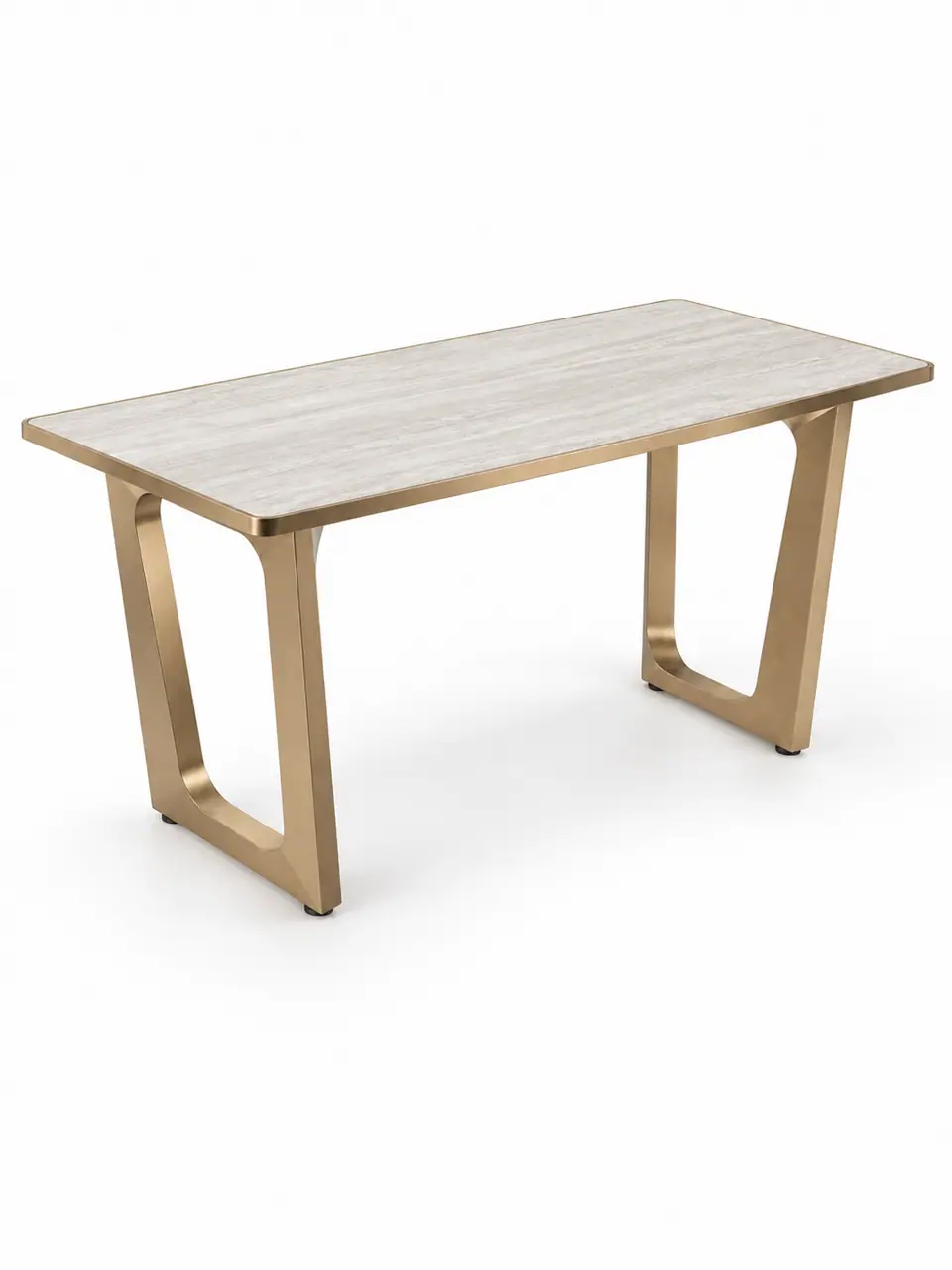
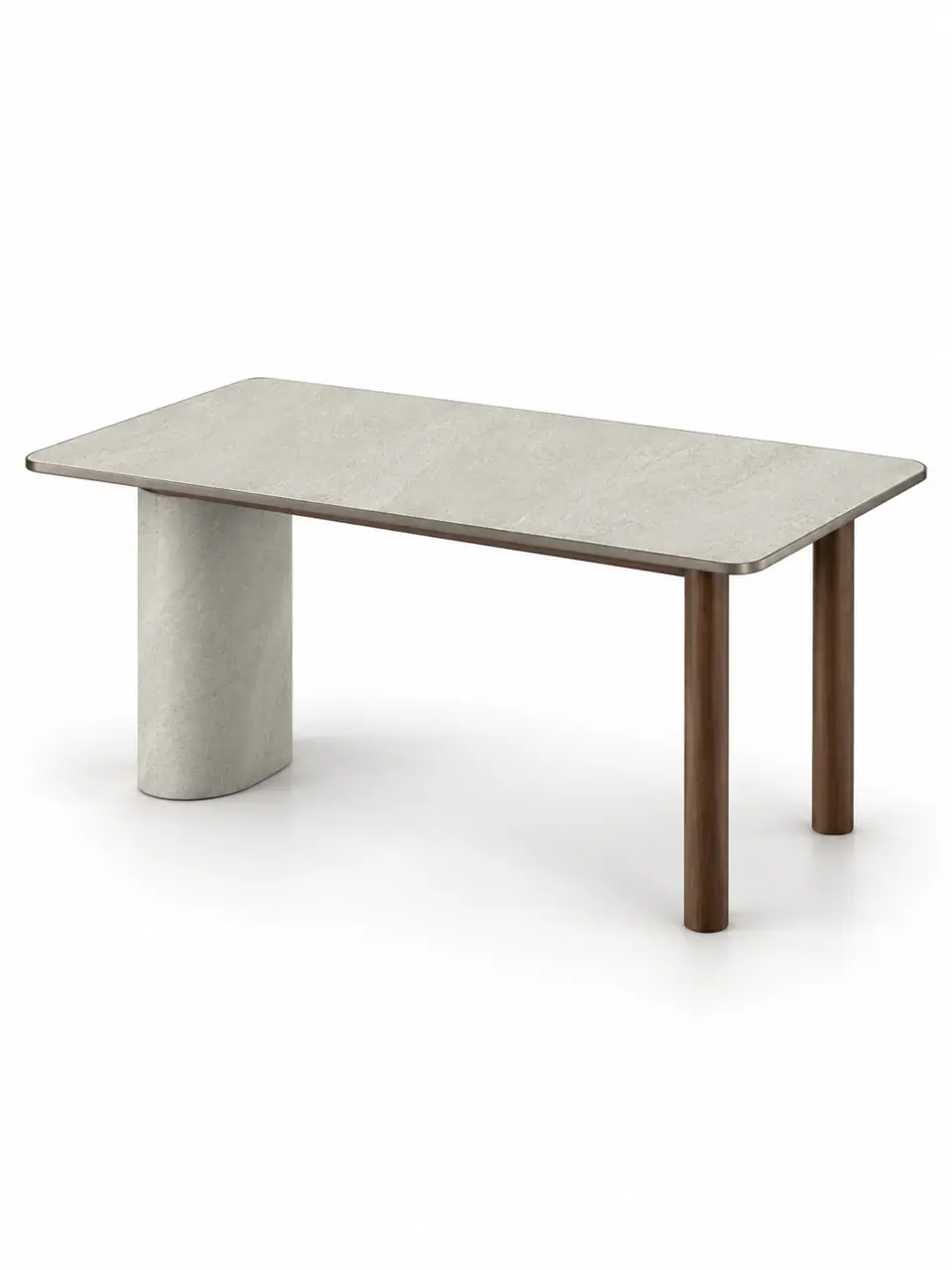
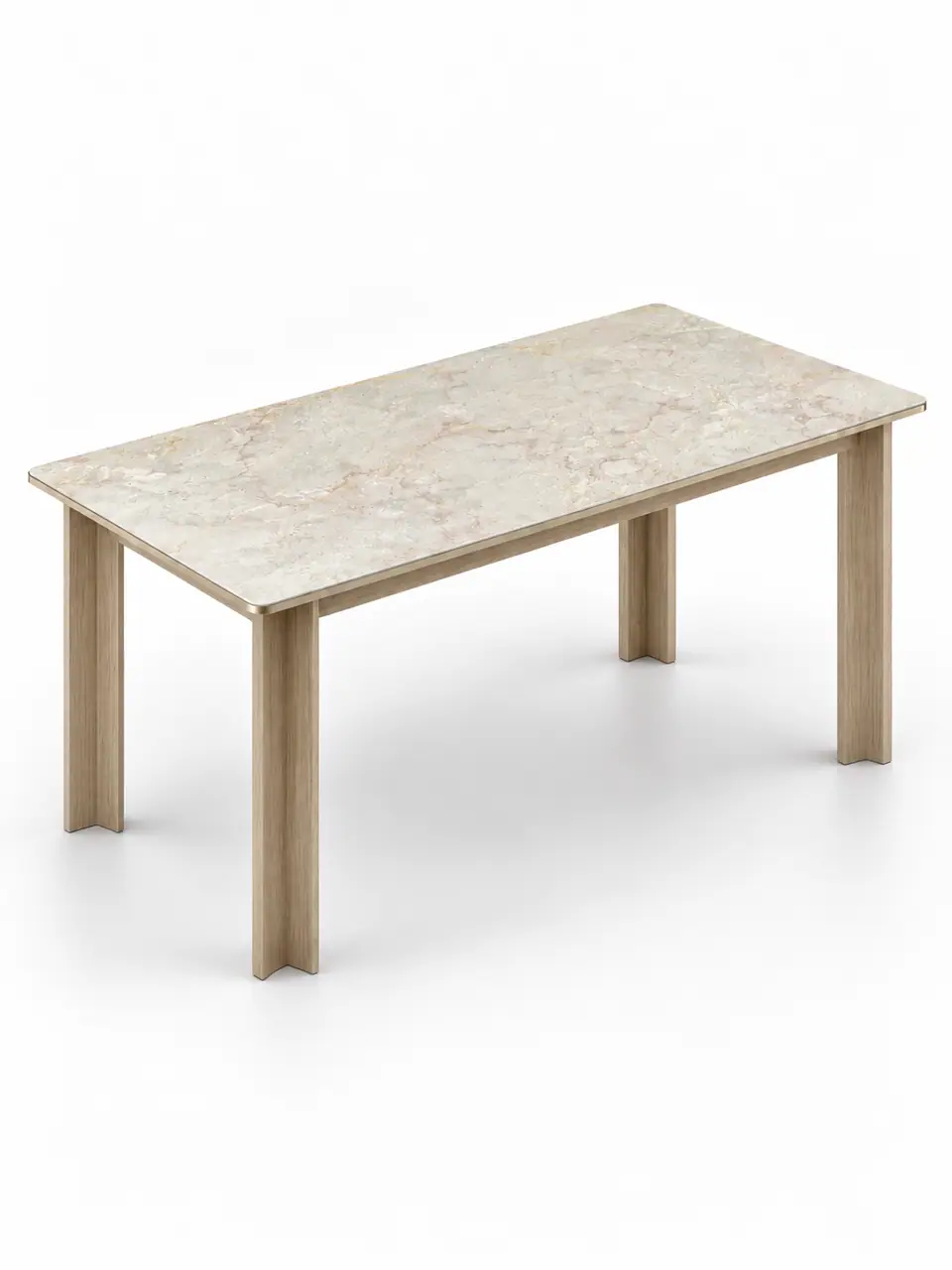
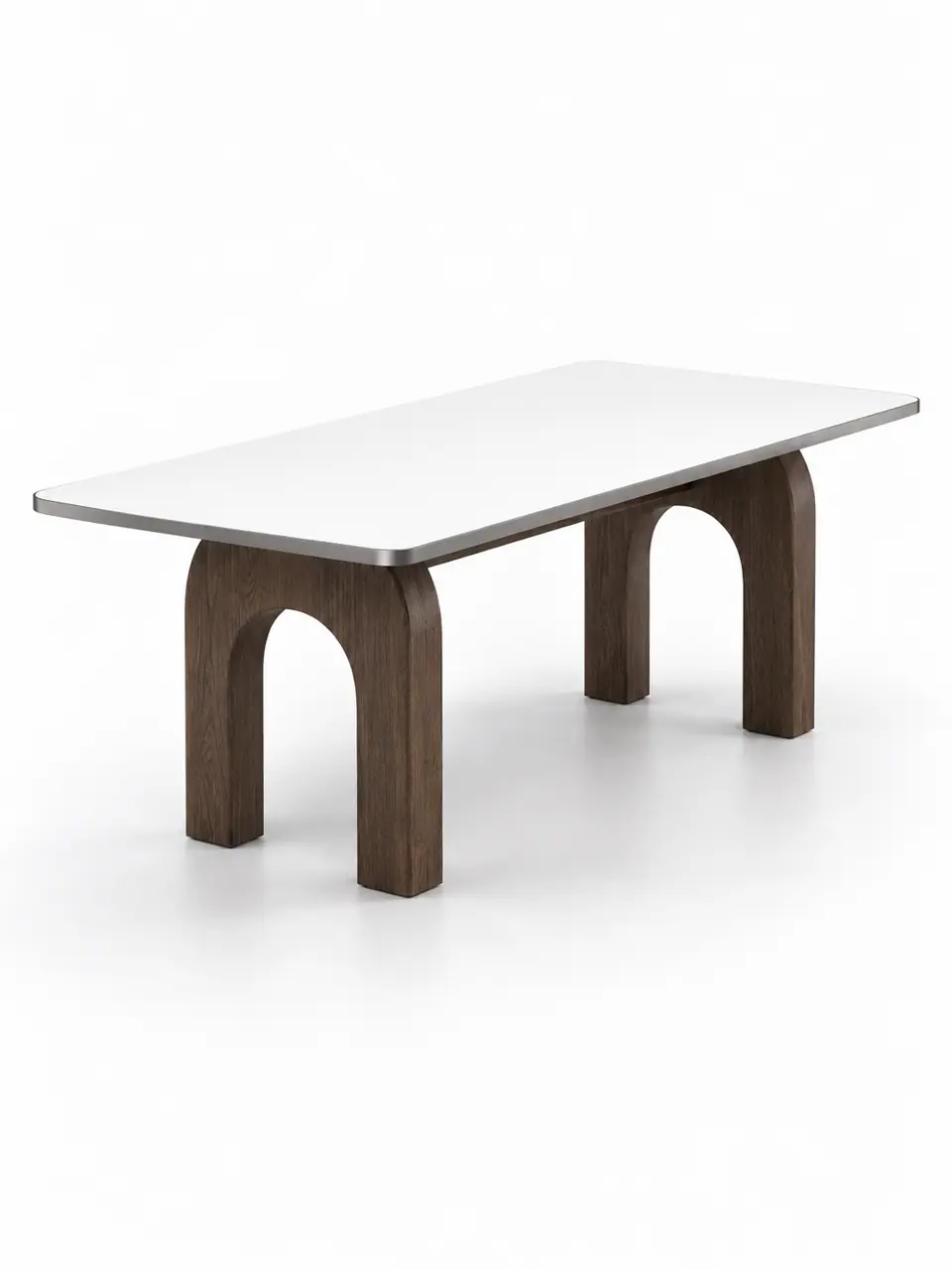
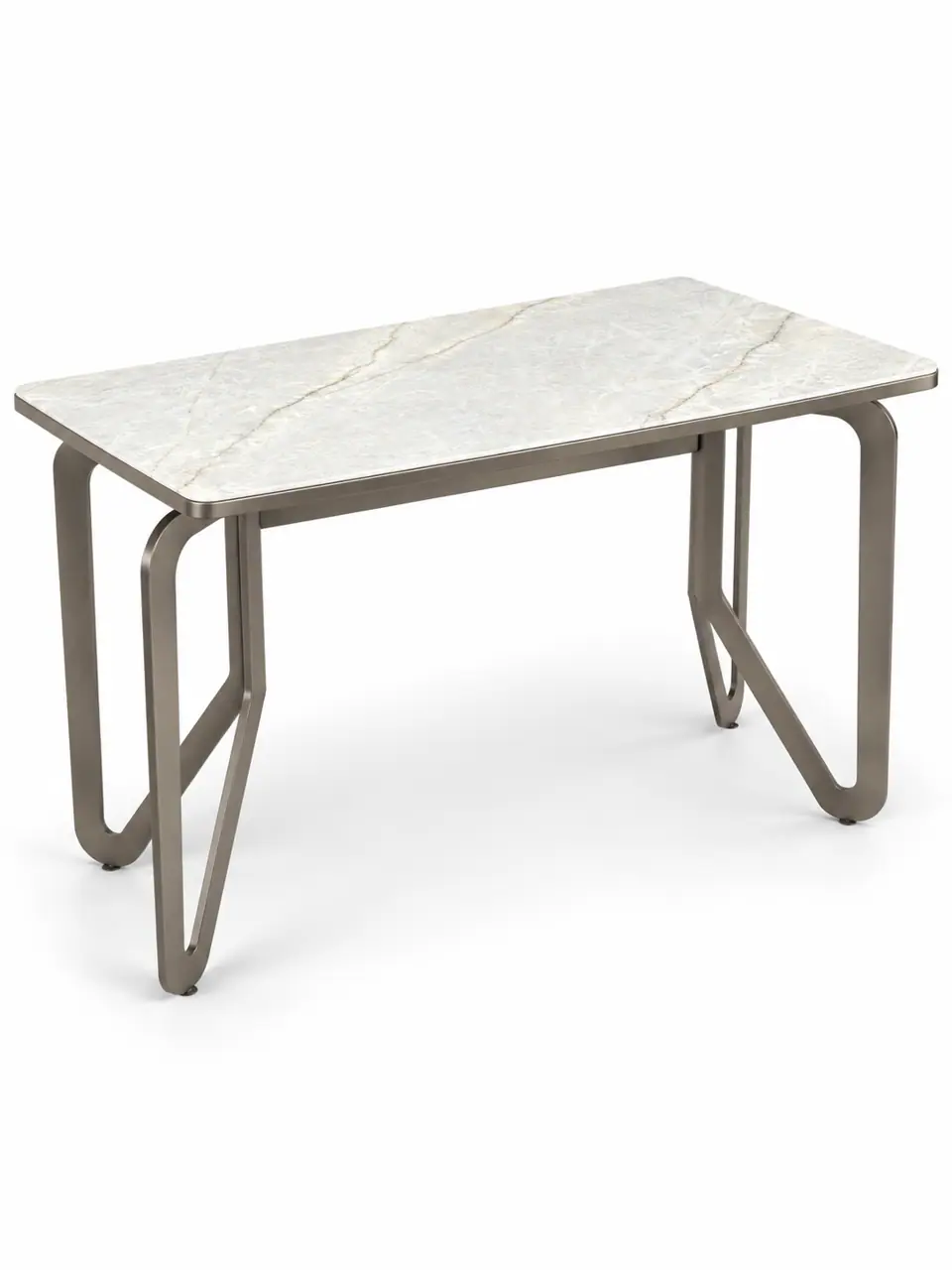
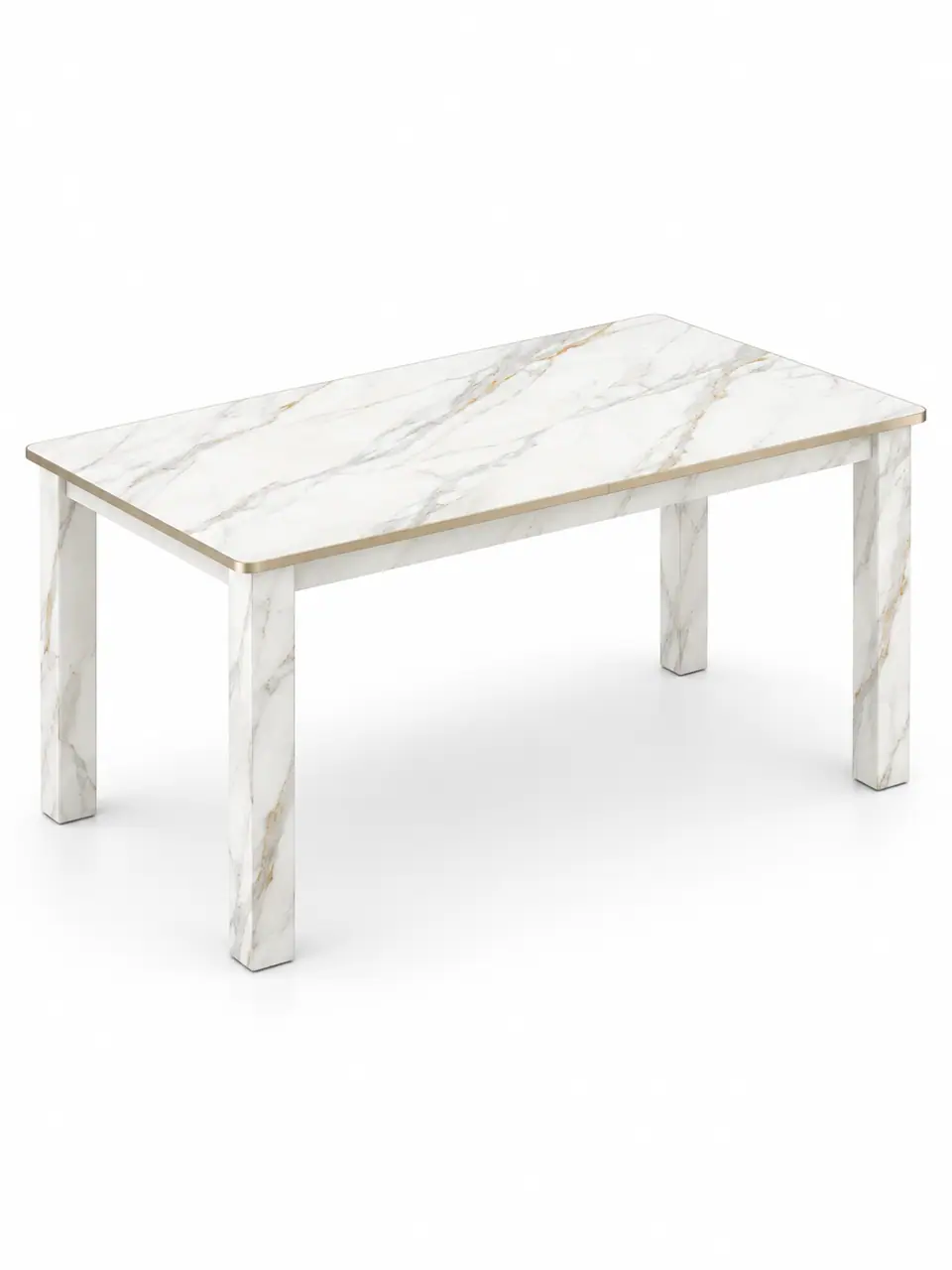
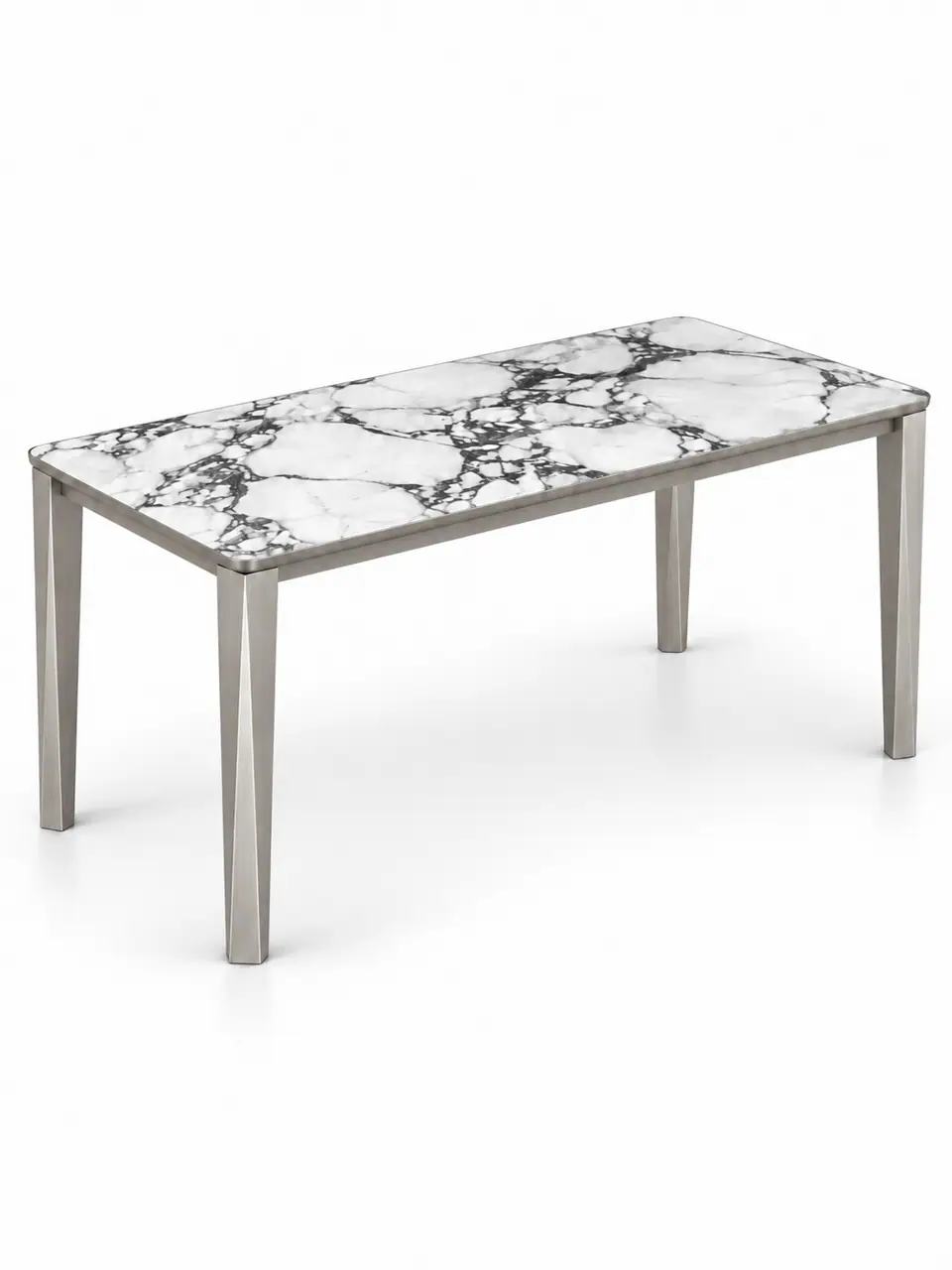
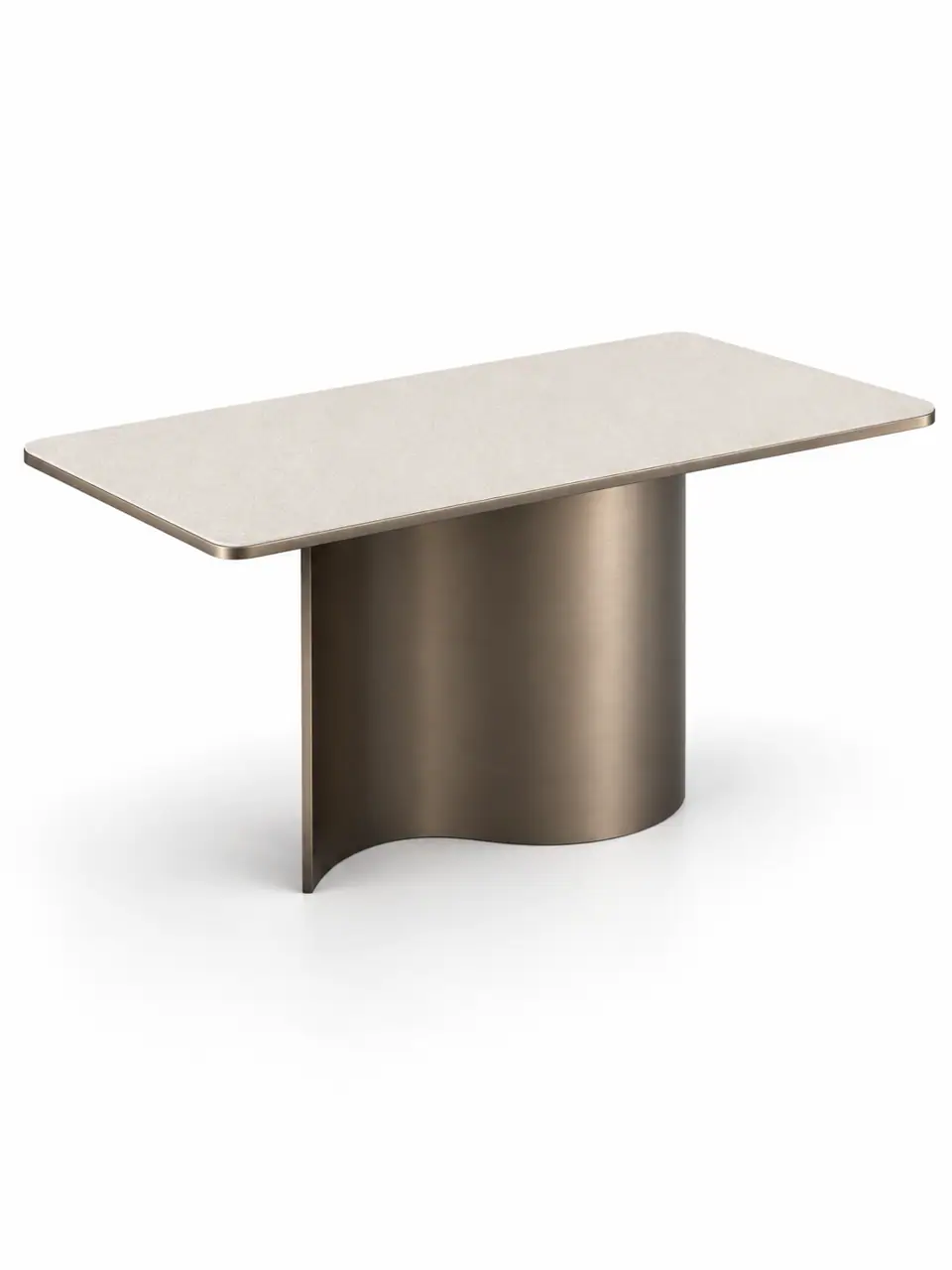
A metal-edge sintered stone table is a stone top finished with a thin band of bronze, champagne, nickel or black titanium instead of timber, set on a sculpted base. The metal protects the corners from chair knocks and trolley hits, and it gives the slab a crisp, jewellery-like outline.
This line is organised the way specifiers actually choose: by the edge metal, by the base structure and by the size. Every table is a dining-height piece at 29½ in (75 cm), made in two standard footprints, and every slab pattern, edge metal and base finish can be changed to order.
| Size | Top | Height | Seats | Typical use |
|---|---|---|---|---|
| Square | 23⅝ × 23⅝ in (60 × 60 cm) | 29½ in (75 cm) | Two | Window and wall two-tops; pairs make a four-top |
| Long | 47¼ × 23⅝ in (120 × 60 cm) | 29½ in (75 cm) | Two to four | Banquette-side tables, groups, end-to-end runs |
Bases in the line. Cone and pedestal bases keep the floor clear and suit tight, high-turnover rooms. Four-leg and apron frames are the easiest to place in a grid. Twin piers, drums and plate-and-blade bases give long tables a heavier, more architectural look. Open frames in flat bar or tube let light through and suit smaller rooms.
Edge metals. Bronze and antique bronze warm pale slabs; champagne and light pewter keep white stone bright; gunmetal, black nickel and black titanium frame dark and blue slabs. Matte and brushed finishes show fewer fingerprints than polished ones.
Different sizes, round tops, other edge colours and bespoke slab patterns are available on request. We draw each order against your floor plan before production.